Start with the counter
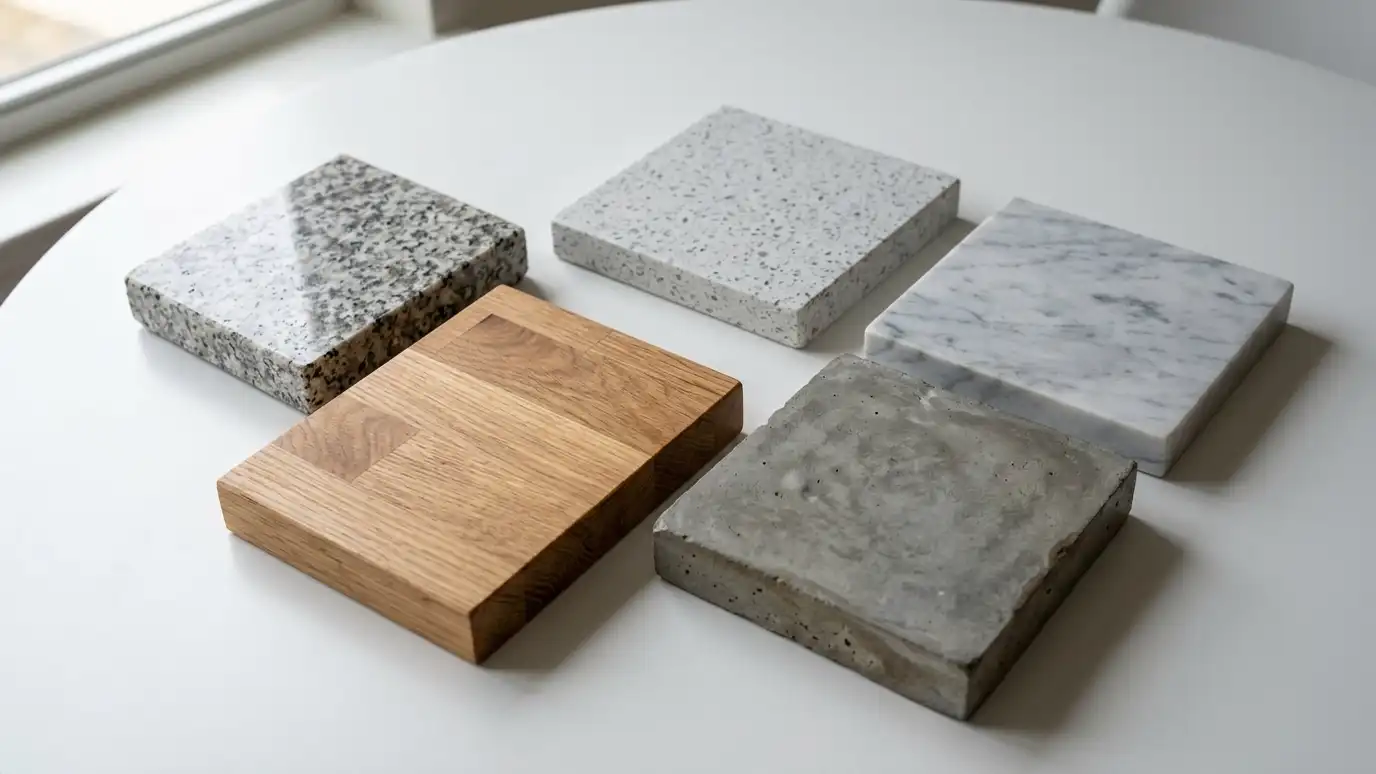
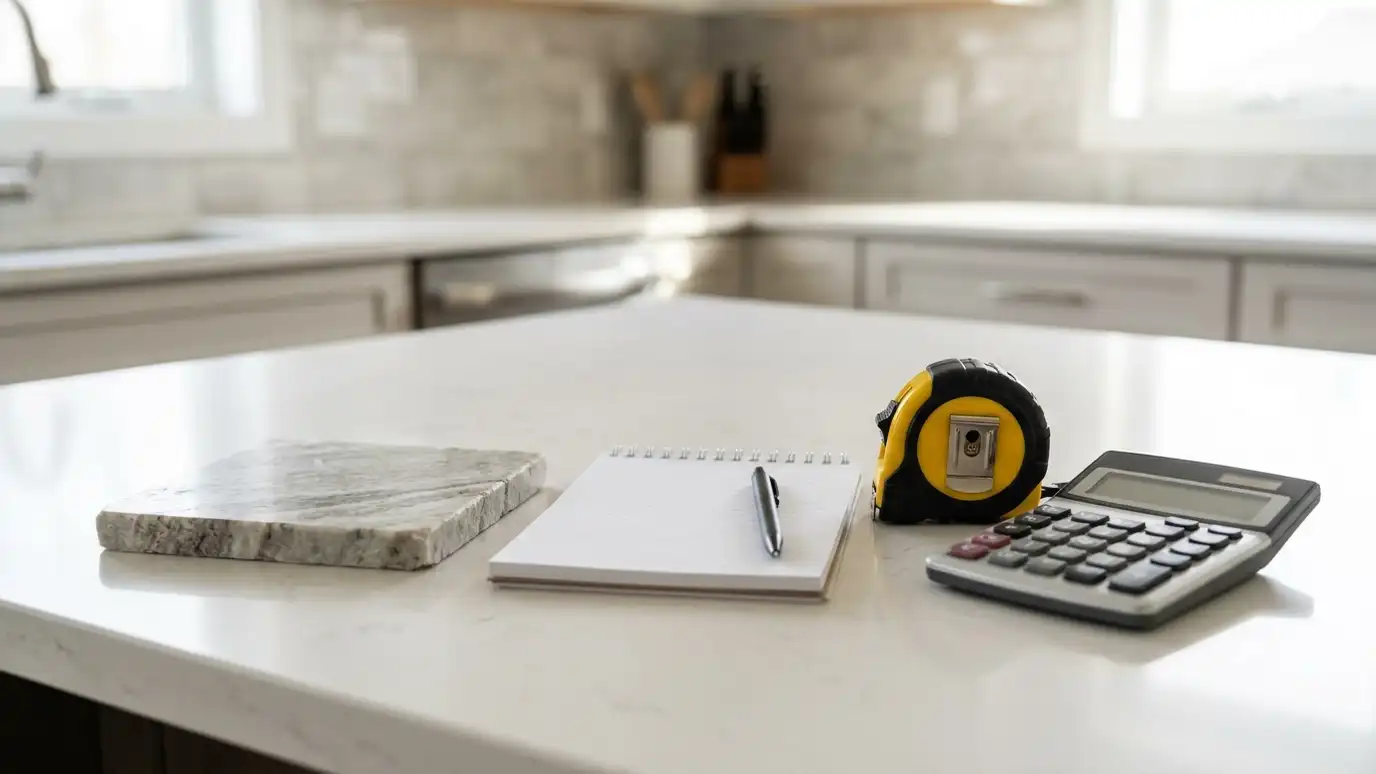
The backsplash should work with the countertop, not compete with it. A busy counter pairs well with a quiet backsplash, and a plain counter can take a pattern.
Hold samples together in your kitchen light.
Think about cabinets and flooring too.
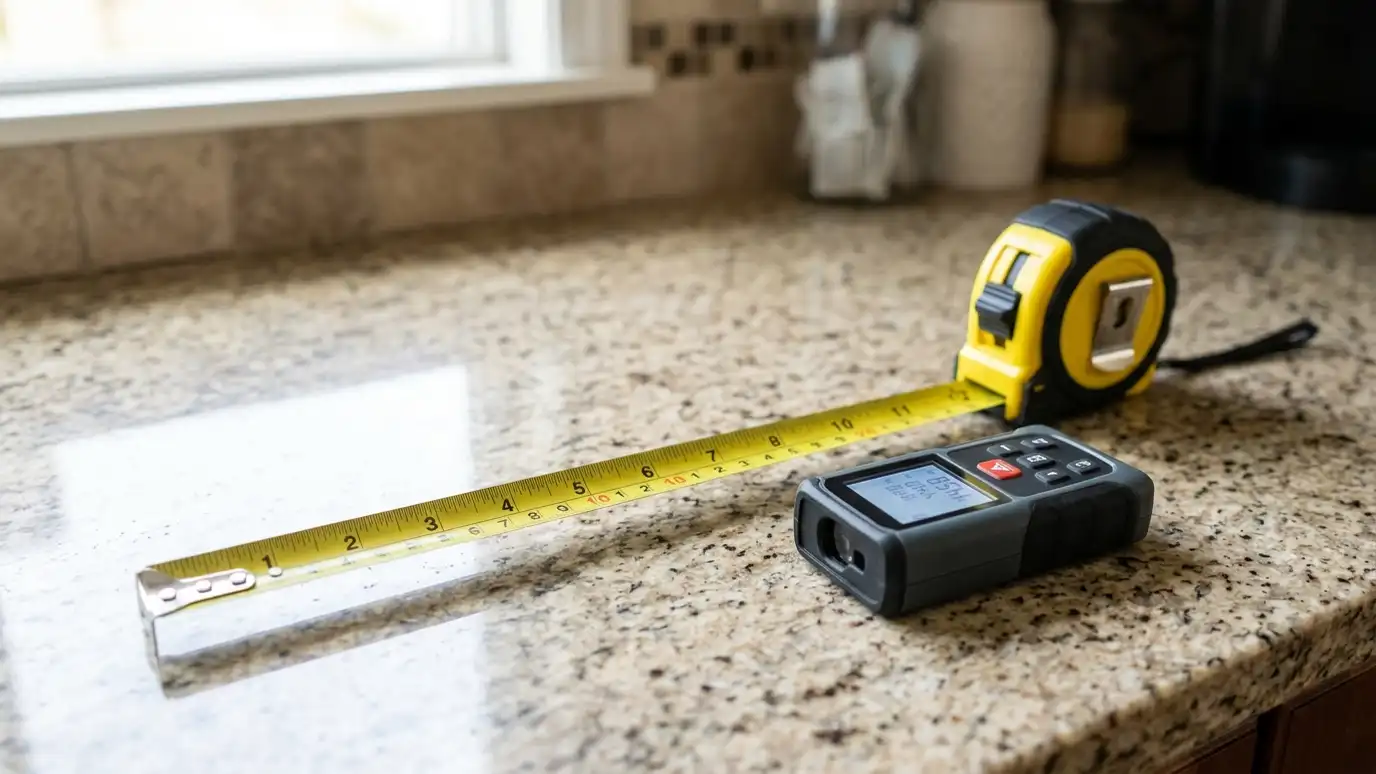
Take a photo of the wall with outlets, windows and the range hood. Share it with your tile setter or with us, so the layout plan can account for them from the start.
Tile
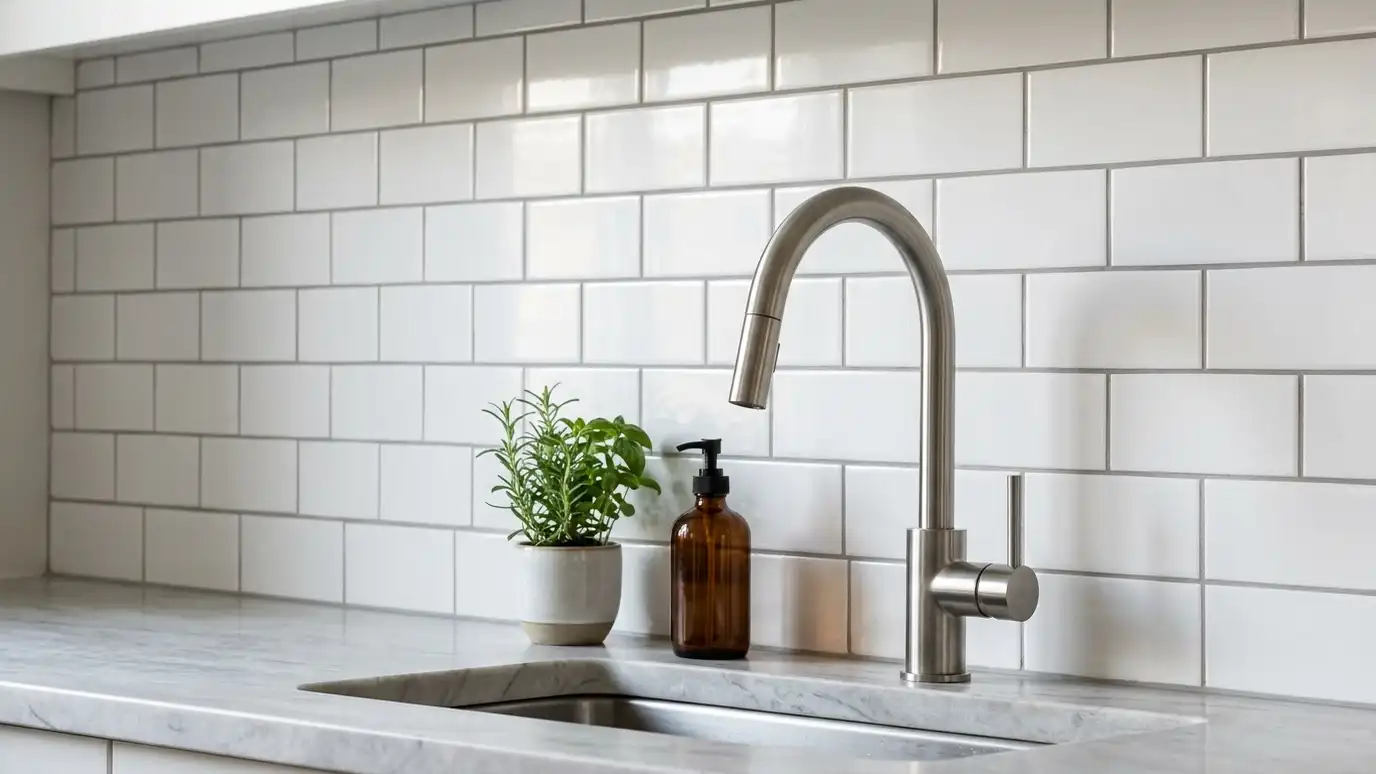
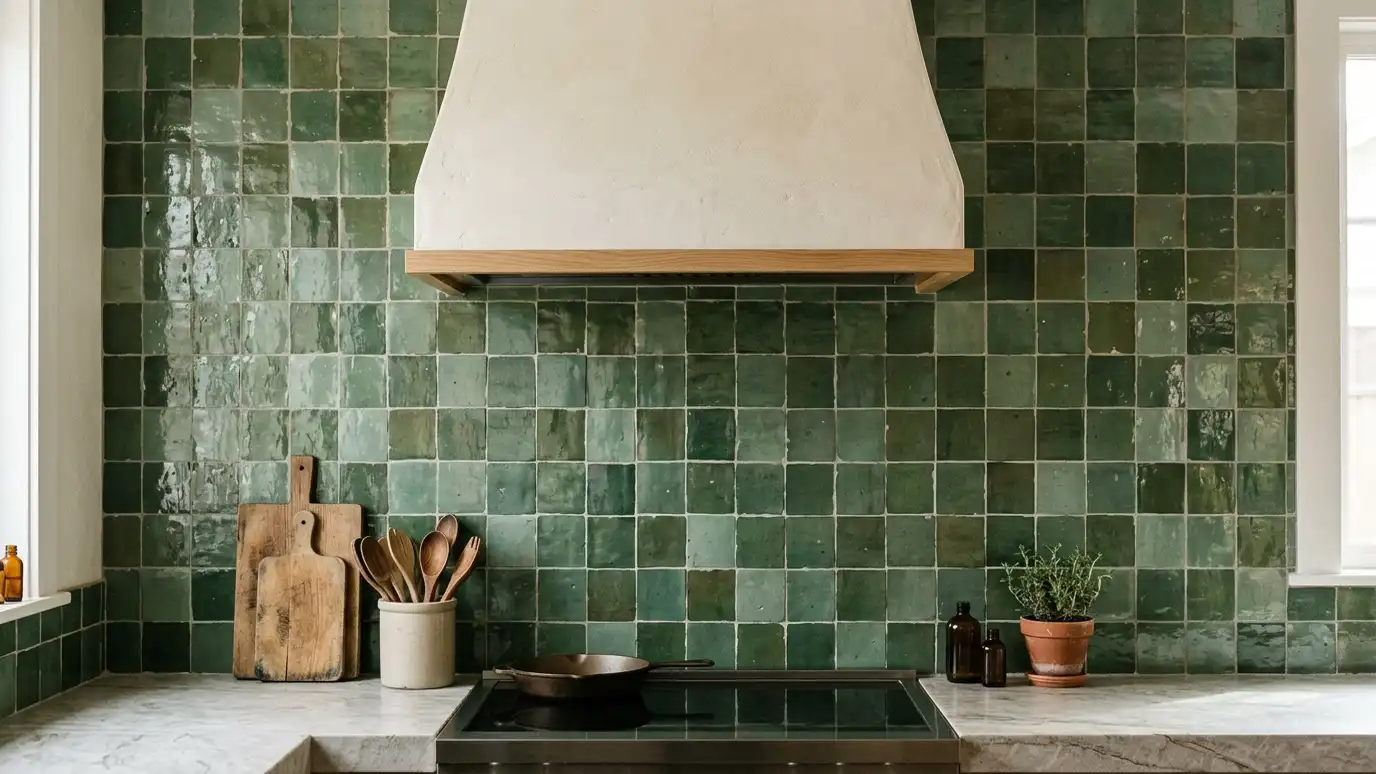
Ceramic and porcelain tile come in endless colors and shapes. Subway tile is classic. Handmade-look tile adds warmth. Mosaic adds texture.
Grout lines are the weak spot, so narrow joints and epoxy grout help.
Layout decides whether the wall looks planned.
Ask for a layout drawing of the pattern. Seeing where cuts fall and where the pattern is centered helps you spot problems before tile is set.
Slab
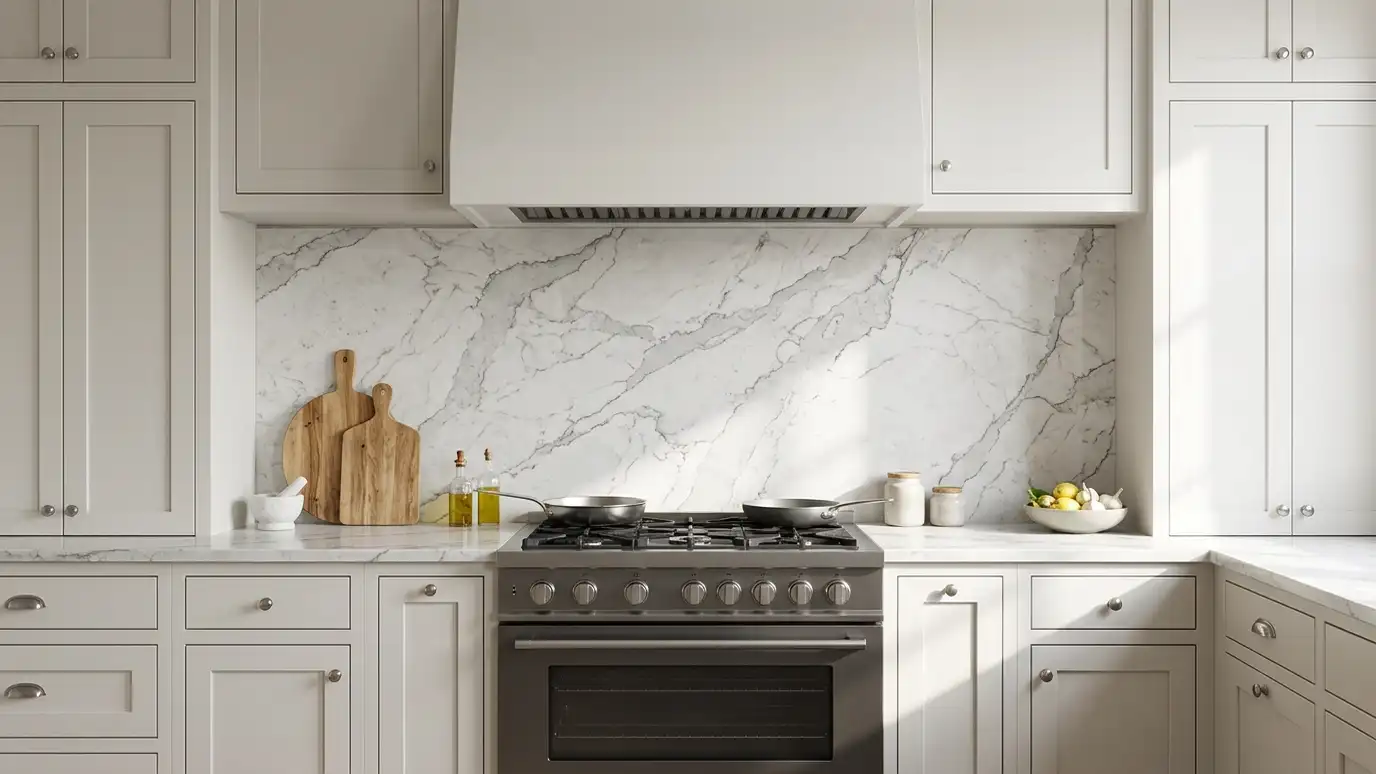
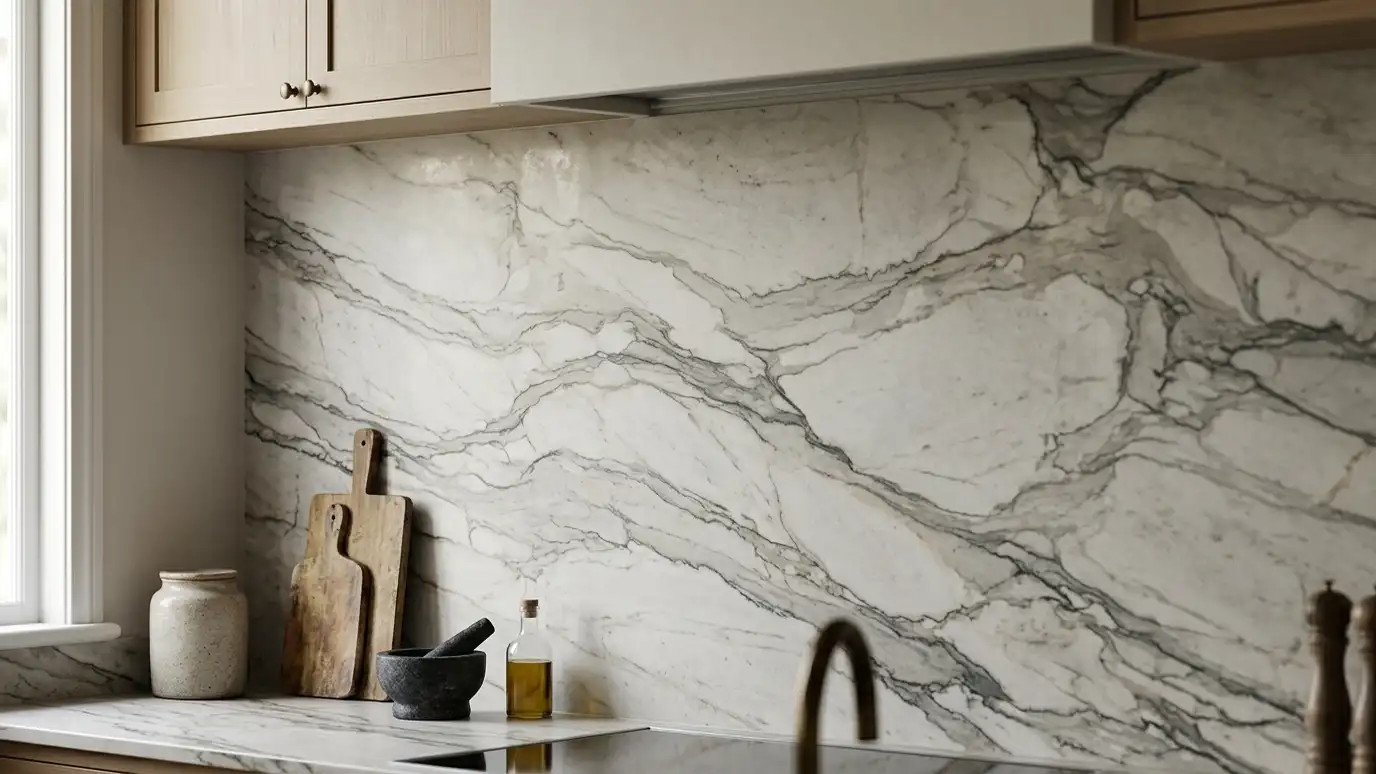
A slab backsplash is a single piece with few joints. It can match the counter or contrast.
It is easy to clean and needs precise cuts around outlets and windows.
It uses more material.
Choose grout color carefully. A light grout on a light tile feels calm, and a dark grout outlines each tile. Grout often changes the look more than people expect.
Height
A four-inch splash protects the wall. A mid-height splash covers the area behind the range. A full-height splash runs to the cabinets or ceiling.
Choose based on how you cook and how much wall is exposed.
Full height makes a statement.
If you are choosing a slab backsplash, plan the cuts for the range hood and any shelves early. Cuts in a large slab are final, and good planning avoids waste.
Outlets and details
Outlets, switches and shelves must be planned. We cut around them neatly and may adjust boxes with your electrician.
Window returns and range hood areas need thought.
Caulk, not grout, goes where the backsplash meets the counter.
Check that outlets are the right depth for the new wall surface. Tile and slab add thickness, and electricians can adjust boxes so covers sit flush.
Timing
We usually install the countertop first, then the backsplash, so the joint is neat. Grout needs time to cure.
Plan the order with your other trades.
We coordinate the two so the kitchen is ready sooner.
Ask when you can use the kitchen after the backsplash goes in. Adhesive and grout need time to cure, and we tell you when it is safe to clean and cook.
Choose the backsplash together with the countertop, keep one of them quiet and plan the height and outlets early.