What is templating
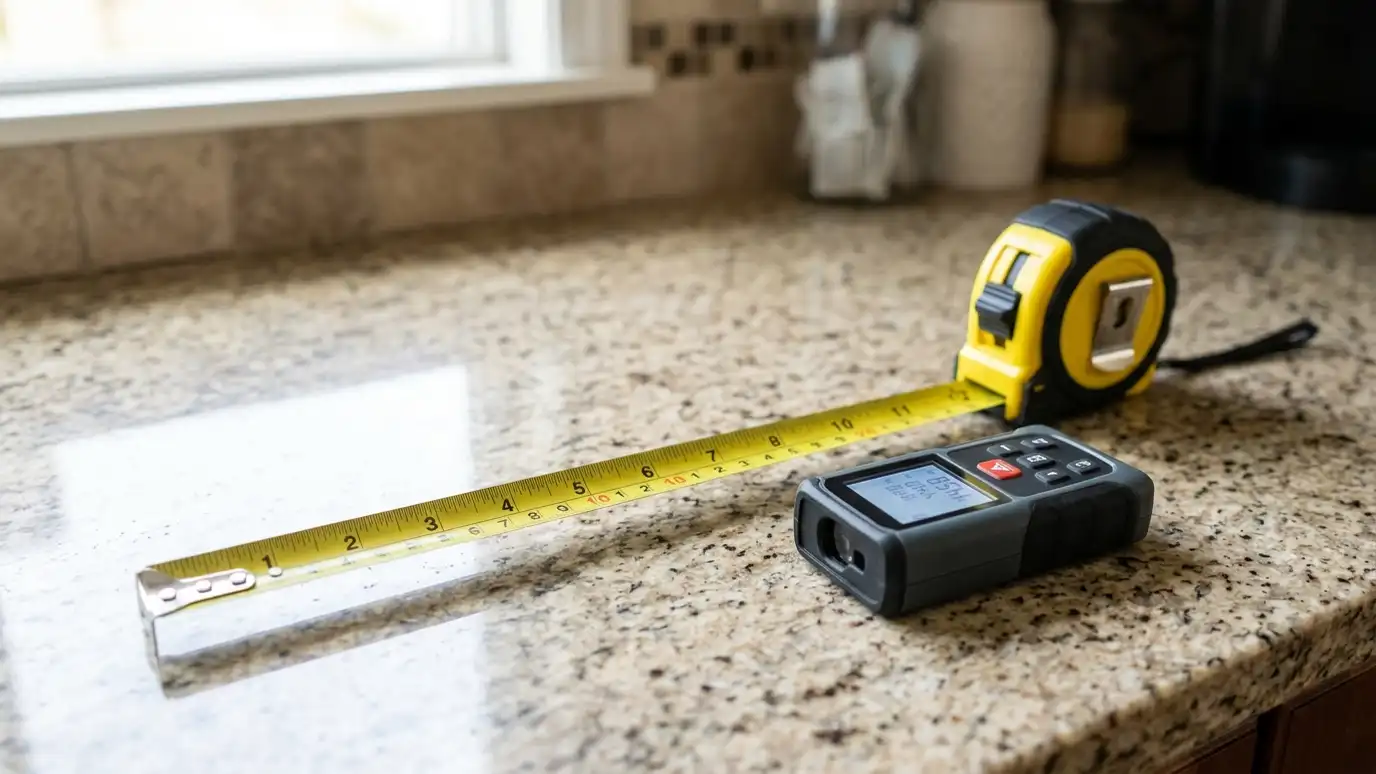
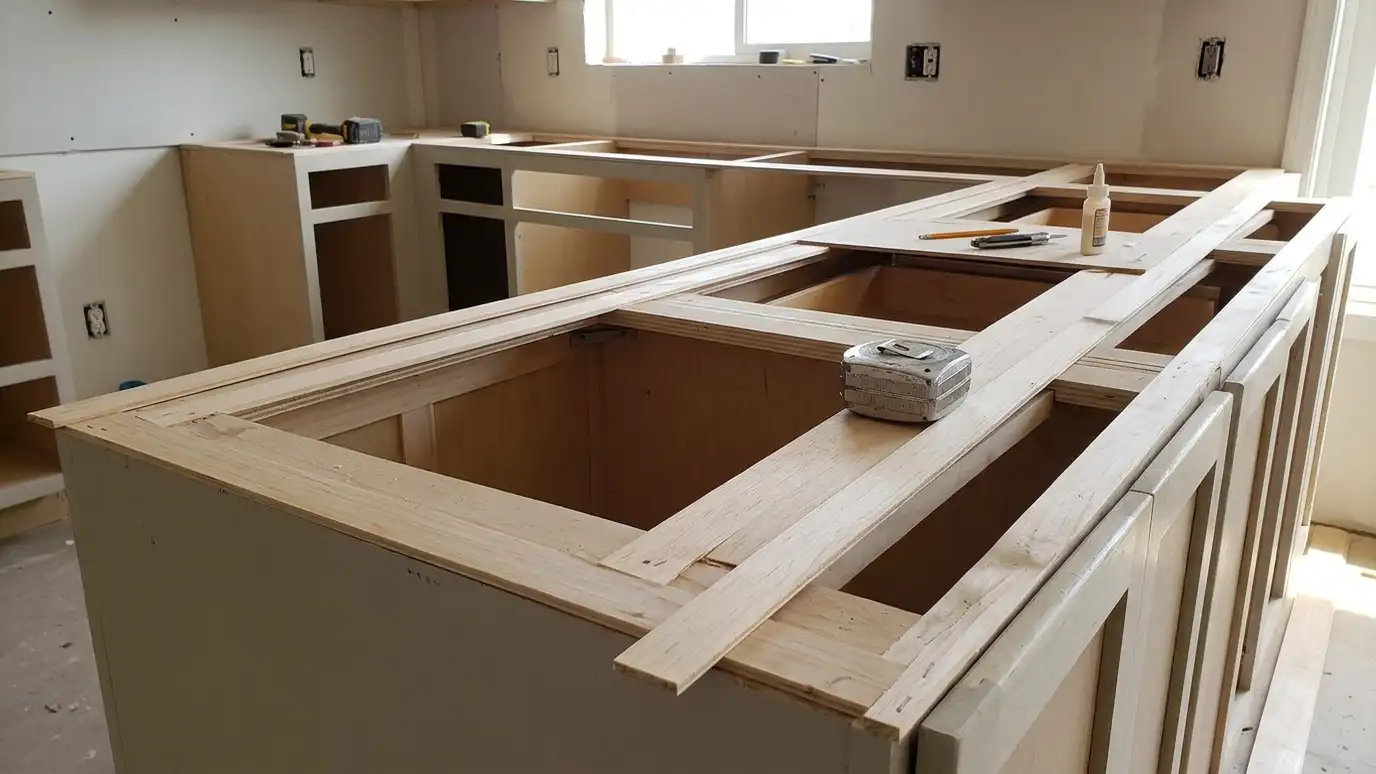
Templating is an exact measurement of your cabinets and walls. A template, made of thin wood strips or digital scans, records the shape of every run, corner and cutout so the countertop is cut to fit.
It is the most important step for a good fit.
Slabs cannot be stretched, so accuracy matters.
Take a few photos of your kitchen before templating, showing outlets, windows and pipes. Photos help us plan around them and remember details for the layout.
When it happens
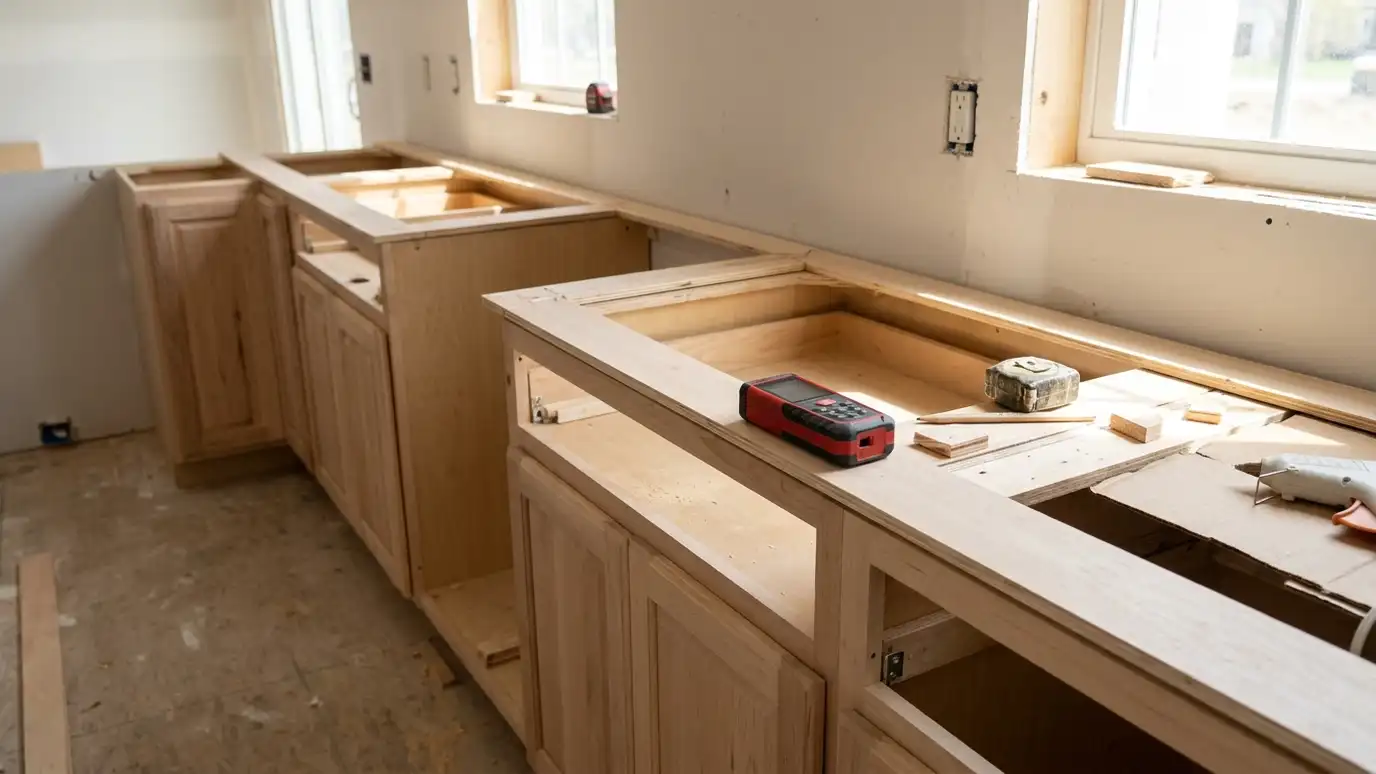
Templating takes place after the cabinets are installed, leveled and secured, and before the countertop is ordered or cut. Walls should be finished enough that they will not change.
Moving a cabinet after templating means a new template.
Most kitchens take an hour or two.
Check that cabinet doors, drawers and handles are installed or will not change the measurements. Heavy changes after templating may affect the fit.
How to prepare
Clear the countertops and the area, remove items from the cabinets near the sink and cooktop and have the sink, faucet and cooktop models ready. Make sure cabinets are fastened down.
Have decisions about edge, overhang and backsplash ready.
Someone should be home to approve the layout.
Tell us about any changes to appliances, since a different cooktop or range changes the cutout and the clearances. It is better to decide before templating.
What we check
We check cabinets for level, walls for straightness and corners for angles. We note outlets, windows, pipes and obstructions. We measure overhangs and plan supports.
We confirm seam locations and slab layout.
We note anything that needs fixing before installation.
Ask for a copy of the layout drawing and keep it with your project records. It is a record of where seams, cutouts and overhangs were planned.
Odd walls and corners
Most houses have walls that are not straight and corners that are not square. A good template follows them, and the countertop is scribed or shimmed so gaps are small and even.
A backsplash or caulk joint covers small gaps.
Large gaps may need wall repair.
If your walls are very uneven, ask how the countertop will be scribed. A good fit depends on this step, and small gaps are covered with caulk or a splash.
After templating
We send you a layout drawing or photo to approve, including seams, edges and cutouts. Then the slab is cut and polished in the shop, which usually takes days to a couple of weeks.
We schedule installation and confirm the date.
Please keep the cabinets exactly as they are until then.
Do not worry if templating takes longer than expected. A careful template saves time and money later, and a hurried one can cost a slab.
Template after cabinets are final, have fixture models ready and do not move anything afterward.