Granite
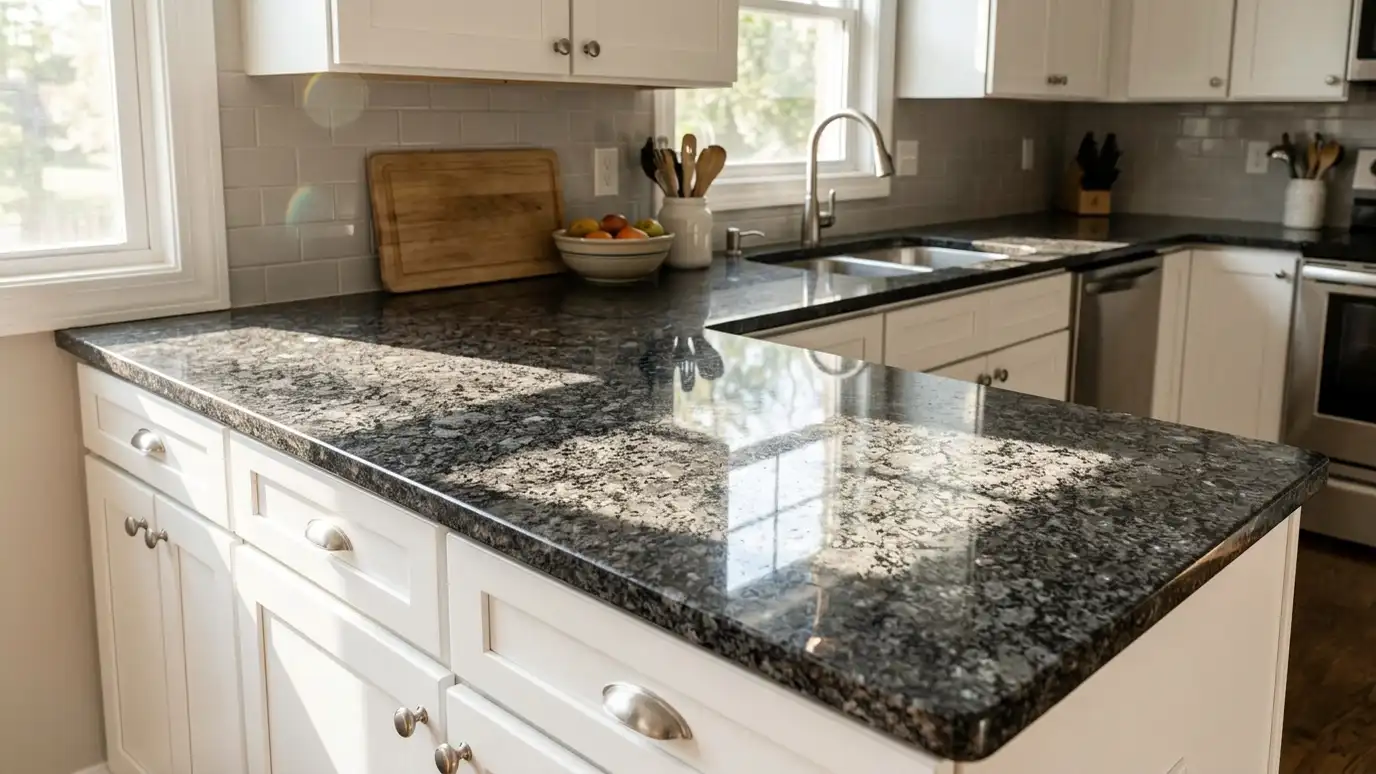
Granite is a natural stone that is hard and handles heat better than many surfaces. Every slab is different, so you can choose a quiet speckled gray or a dramatic swirl. It is sealed after installation and again as needed.
Granite is heavy, so cabinets must be sound. Polished, honed and leathered finishes change its look.
It suits owners who want natural beauty with strong performance.
Granite varies widely. Some slabs are quiet and uniform and others are dramatic, so ask to see the actual slab. A pattern you love in a small sample may look very different across a whole island.
Quartz
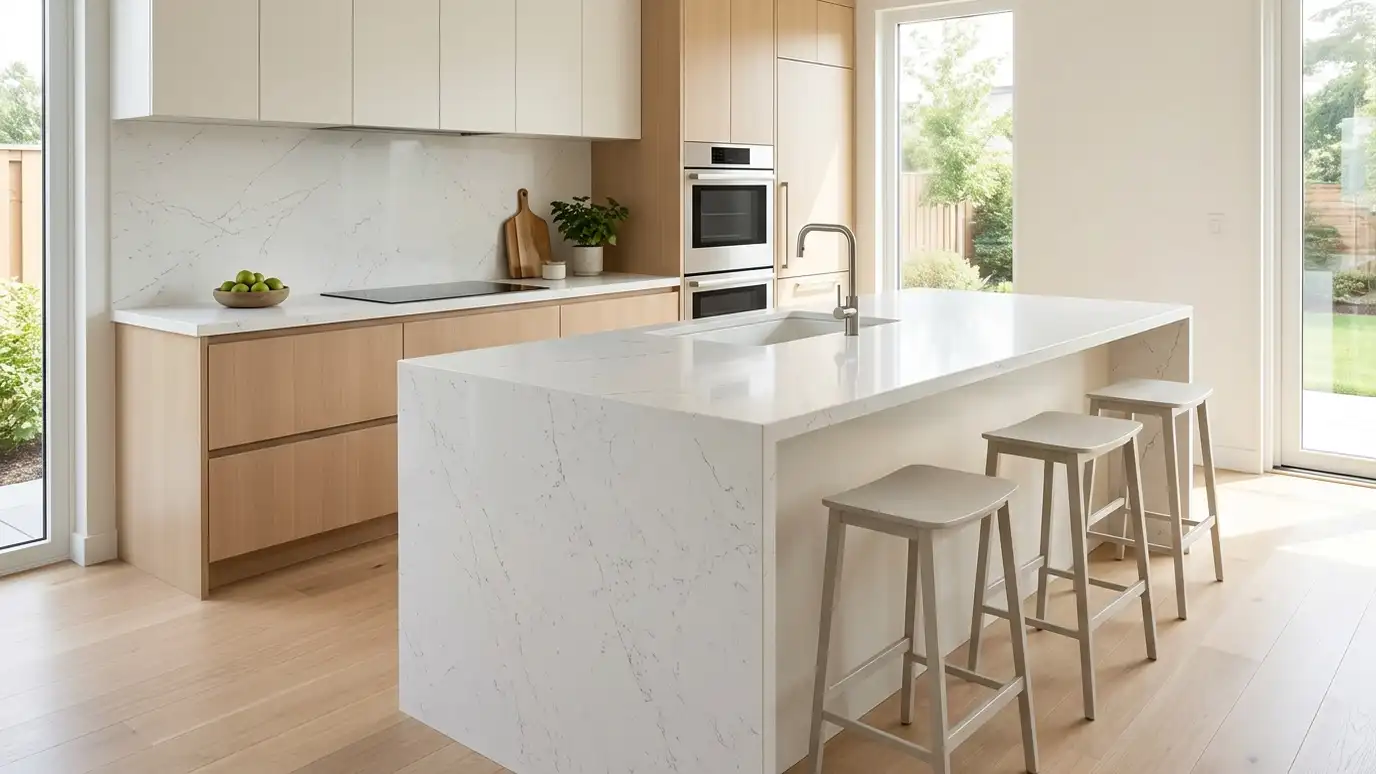
Quartz countertops are made from ground quartz and resin. They have consistent colors and patterns, do not need sealing and resist stains well. They can scorch under very hot pans and fade in strong sunlight.
The range of looks is huge, from pure white to marble-like veining.
Quartz suits busy kitchens and owners who want low upkeep.
With quartz, ask about the color batch and how the pattern repeats. Large kitchens may use more than one slab, and the batches should match. A good fabricator checks this before cutting.
Marble and quartzite
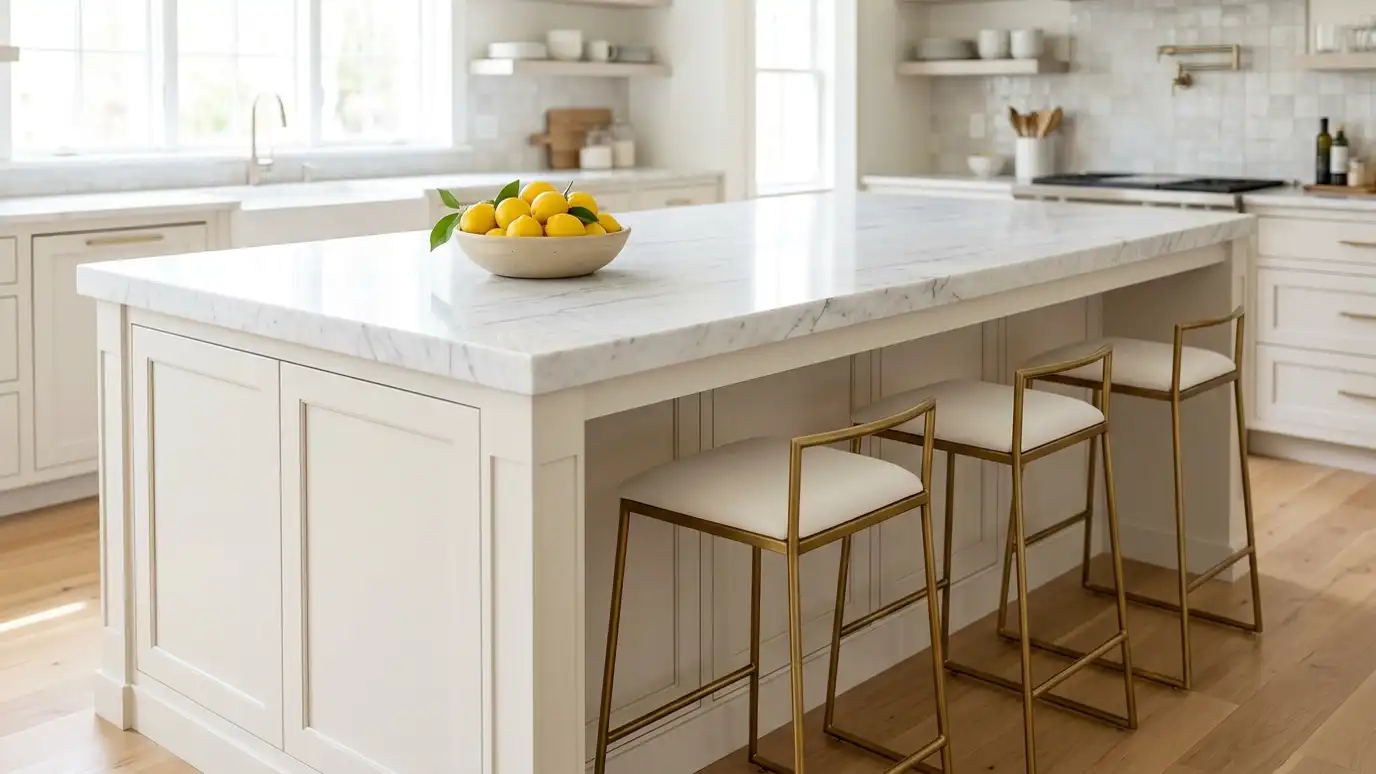
Marble is classic and soft. It etches from acids and develops a patina. Quartzite is a hard natural stone with marble-like veining that resists etching better.
Both are beautiful, and both need sealing and care.
Marble suits owners who accept a living surface, and quartzite suits those who want the look with more strength.
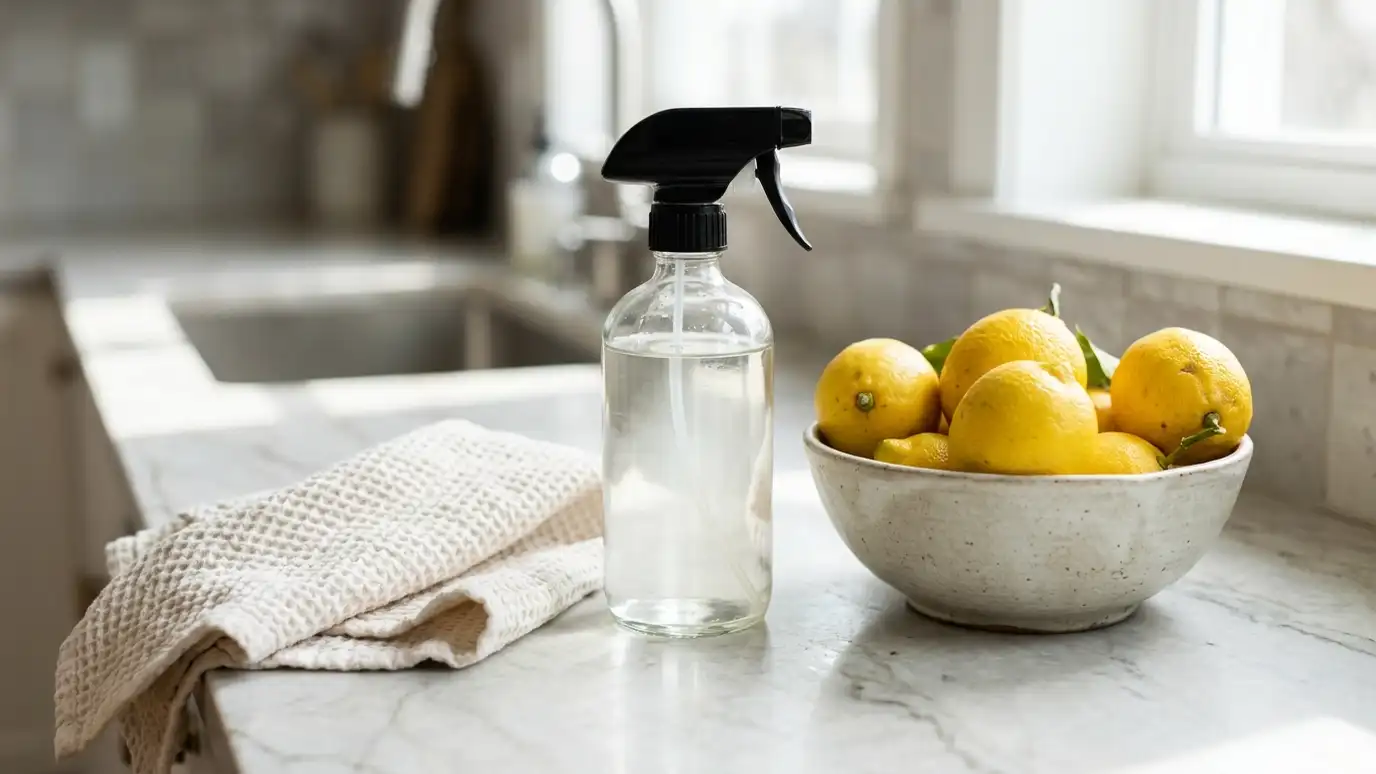
Natural stone like marble and quartzite rewards a little care. A small routine of wiping spills, using coasters and sealing once a year keeps these surfaces looking their best for many years.
Porcelain and sintered stone
These surfaces are very hard, resist heat, scratches and sun and need no sealing. Slabs are large and often thin, so edges and cutouts need care.
They suit modern kitchens and outdoor spaces.
Fabrication takes the right tools and experience.
Porcelain and sintered stone need skilled fabrication. Ask how the shop cuts and polishes them and how edges are finished, since the material is hard and the results depend on technique.
Solid surface, wood, concrete and laminate
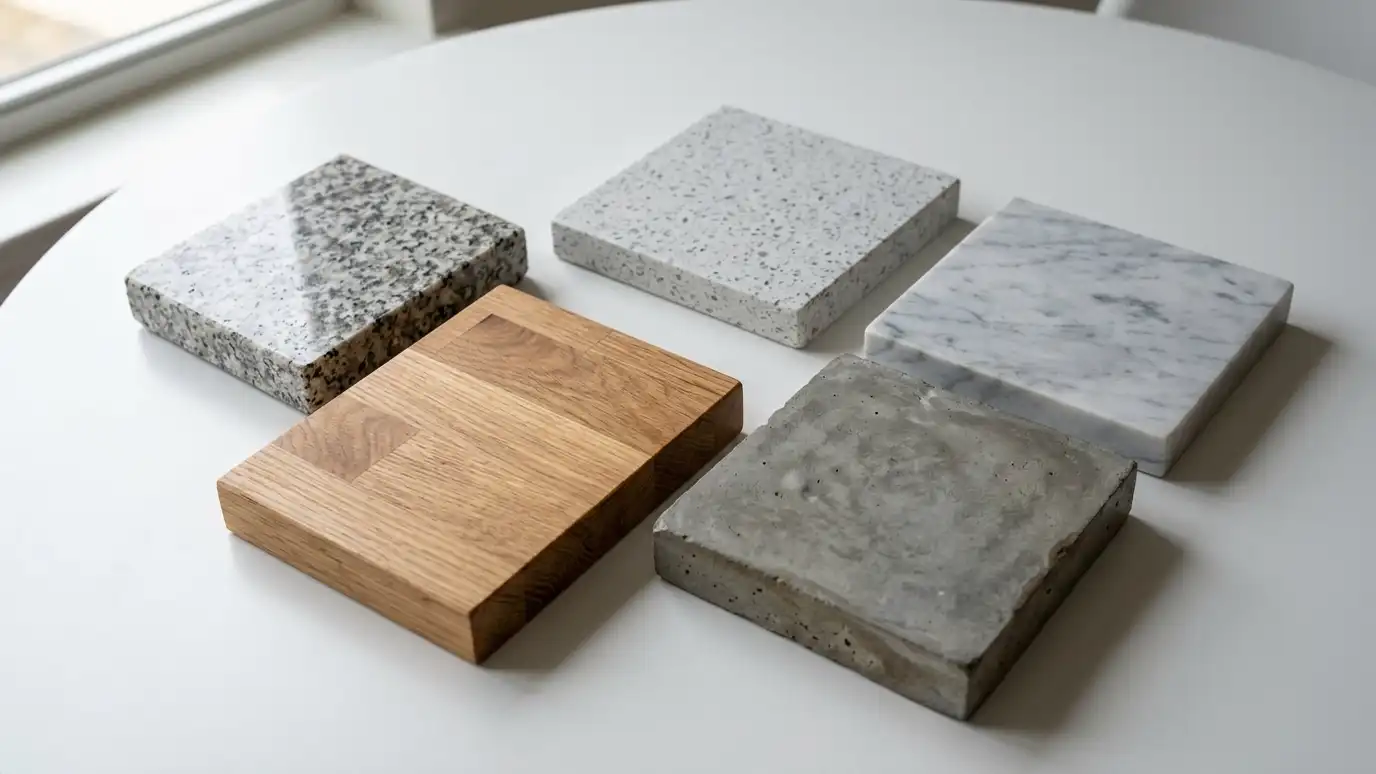
Solid surface is seamless and repairable. Butcher block is warm and needs oil. Concrete is custom and needs sealing. Laminate is affordable and varies in look and durability.
Each has loyal fans and clear limits.
We explain the limits before you choose.
If you are choosing among solid surface, wood, concrete and laminate, think about repairs. Solid surface can be sanded, wood can be refinished and concrete can be resealed, while laminate is usually replaced.
How to choose
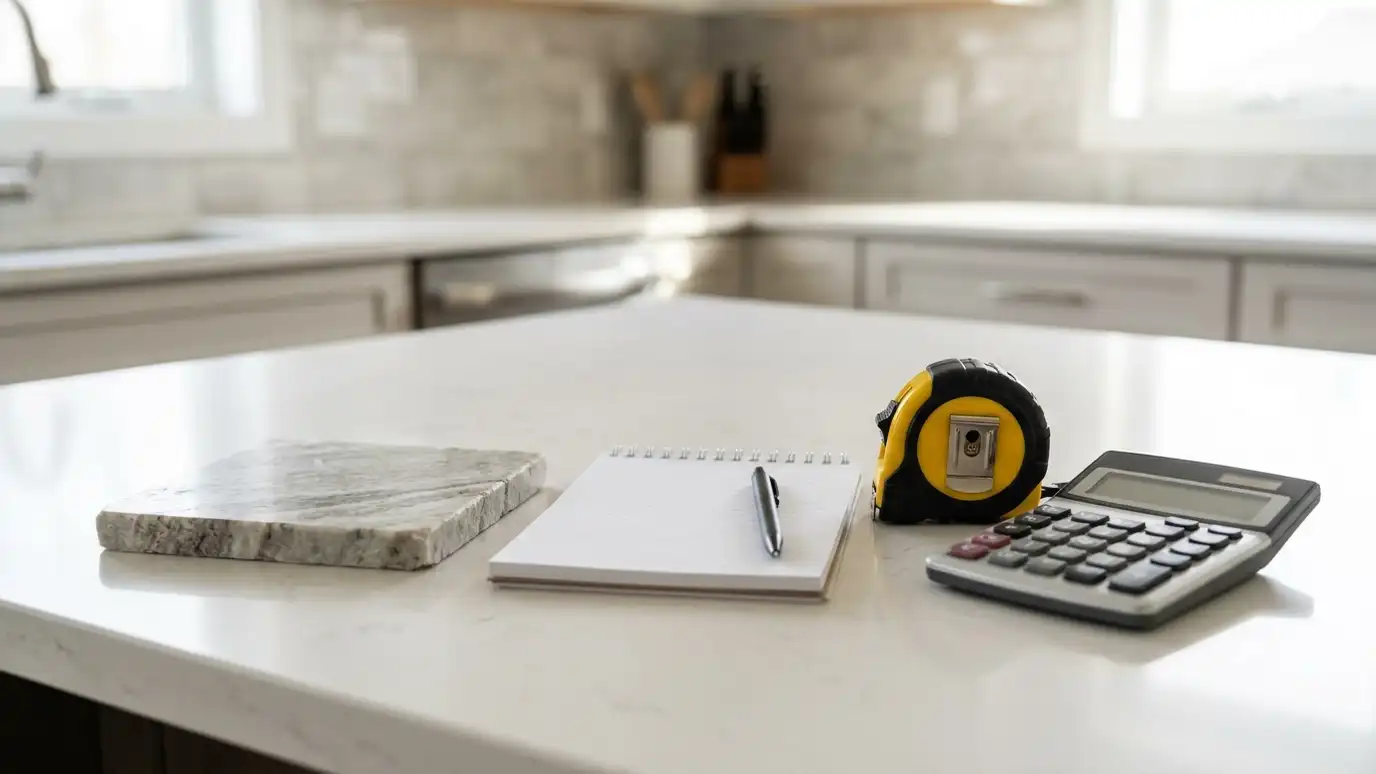
Think about three things: how much care you want to give, how you use the kitchen and what look you love. Then look at slab size, edge, sink and cost.
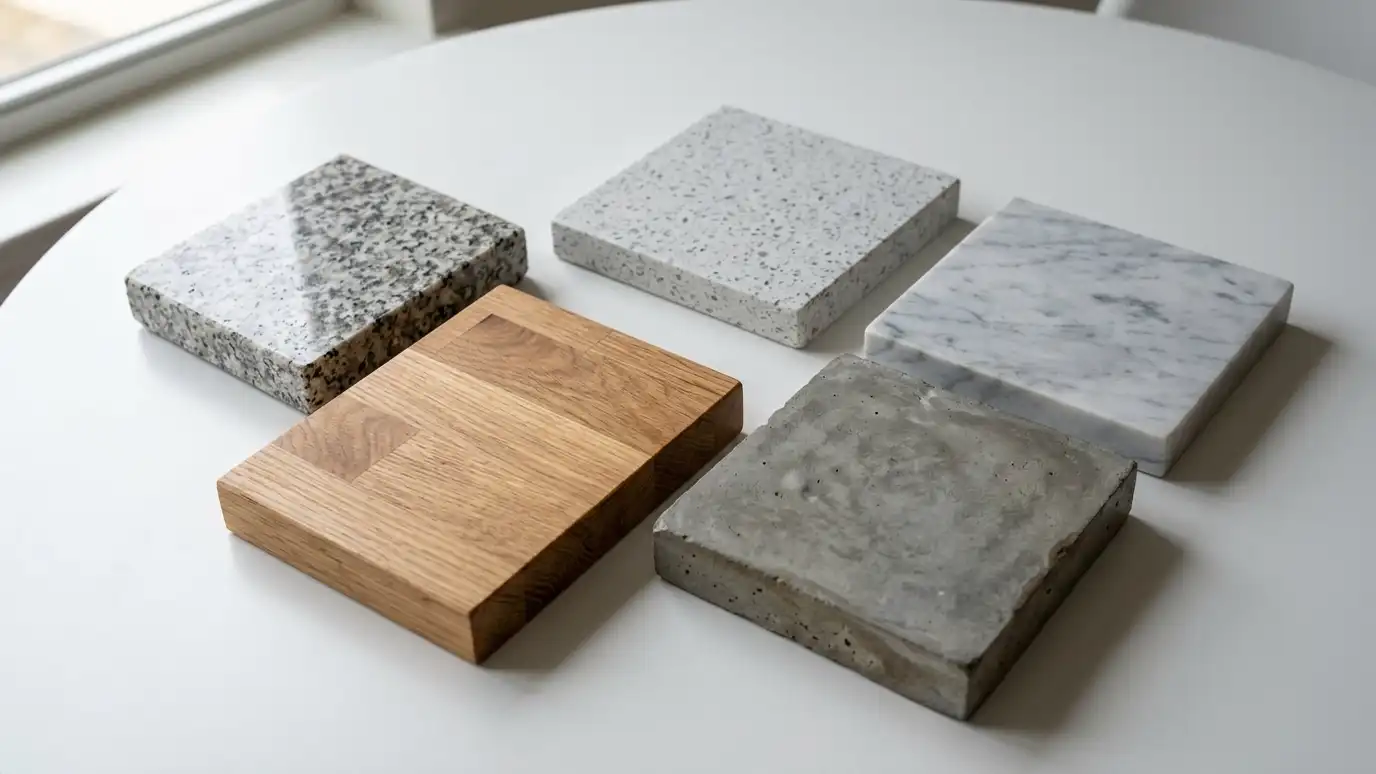
Ask to see full slabs and live with samples for a few days.
We bring samples to the Free Estimate and explain the tradeoffs.
Whatever you choose, ask each company for the same details in writing: the material, color, thickness, edge and finish. Comparing the facts keeps the decision calm.
Choose the material for the care you want to give and the look you love, then check slab, edge and cutouts.