Daily habits
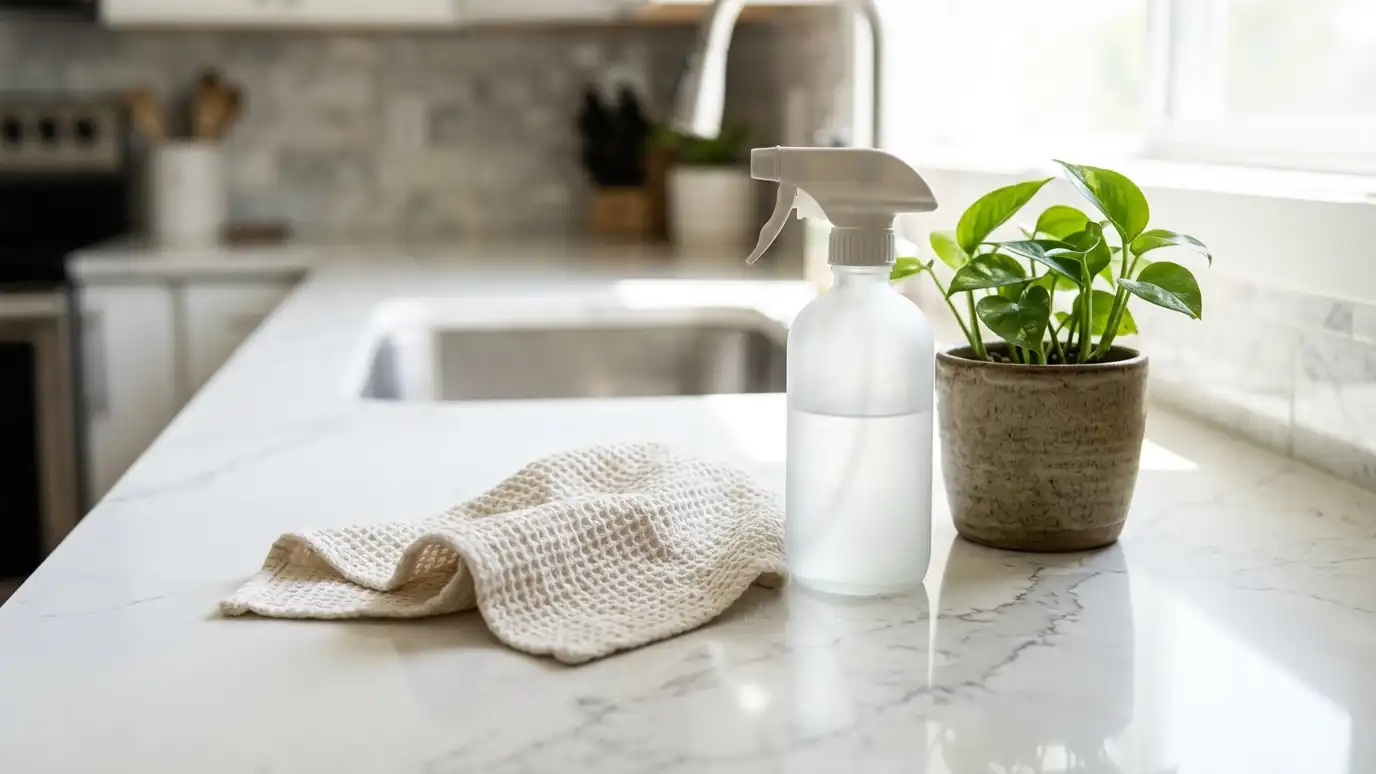
Wipe spills quickly, use cutting boards and trivets and wipe with a soft cloth and mild soap. These three habits prevent most damage on every surface.
Keep sponges and cloths clean, since a dirty sponge spreads grease.
Avoid standing water, especially at seams and sinks.
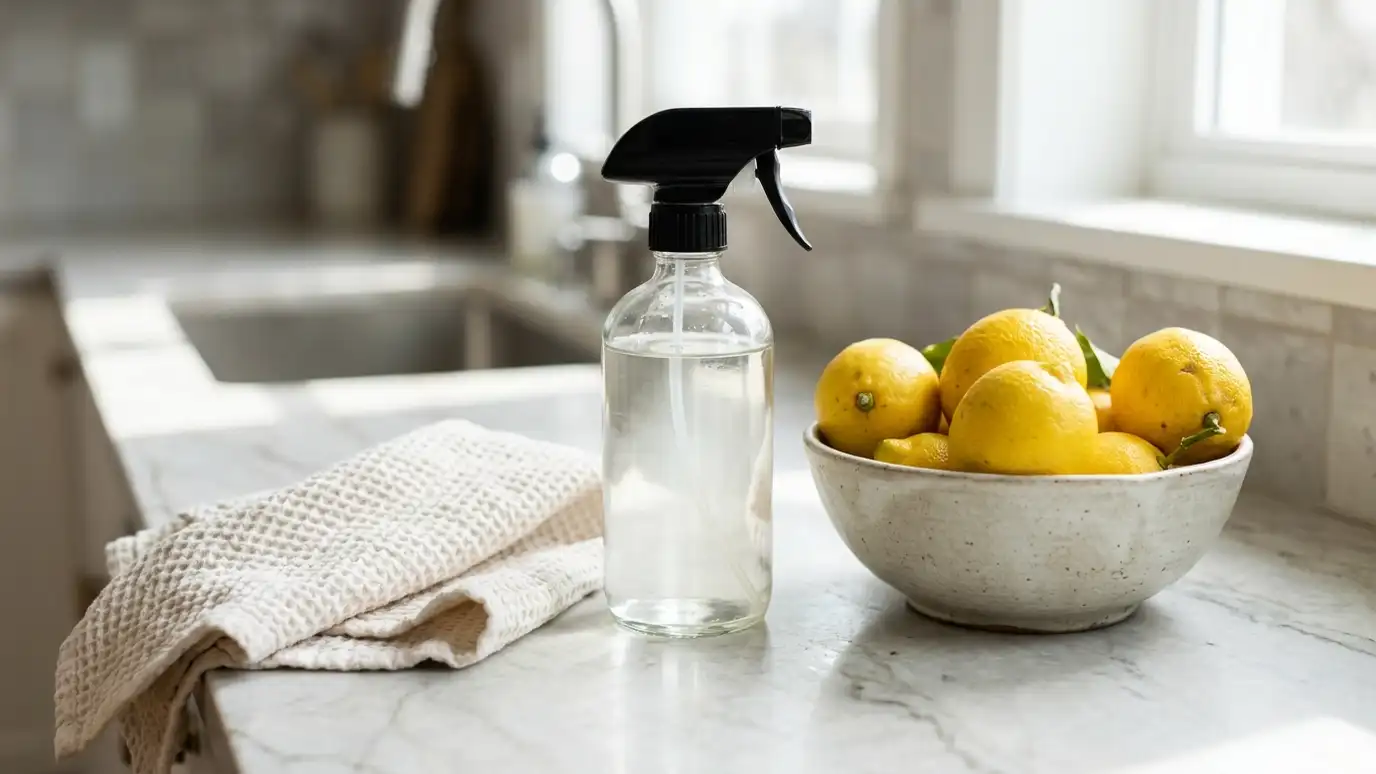
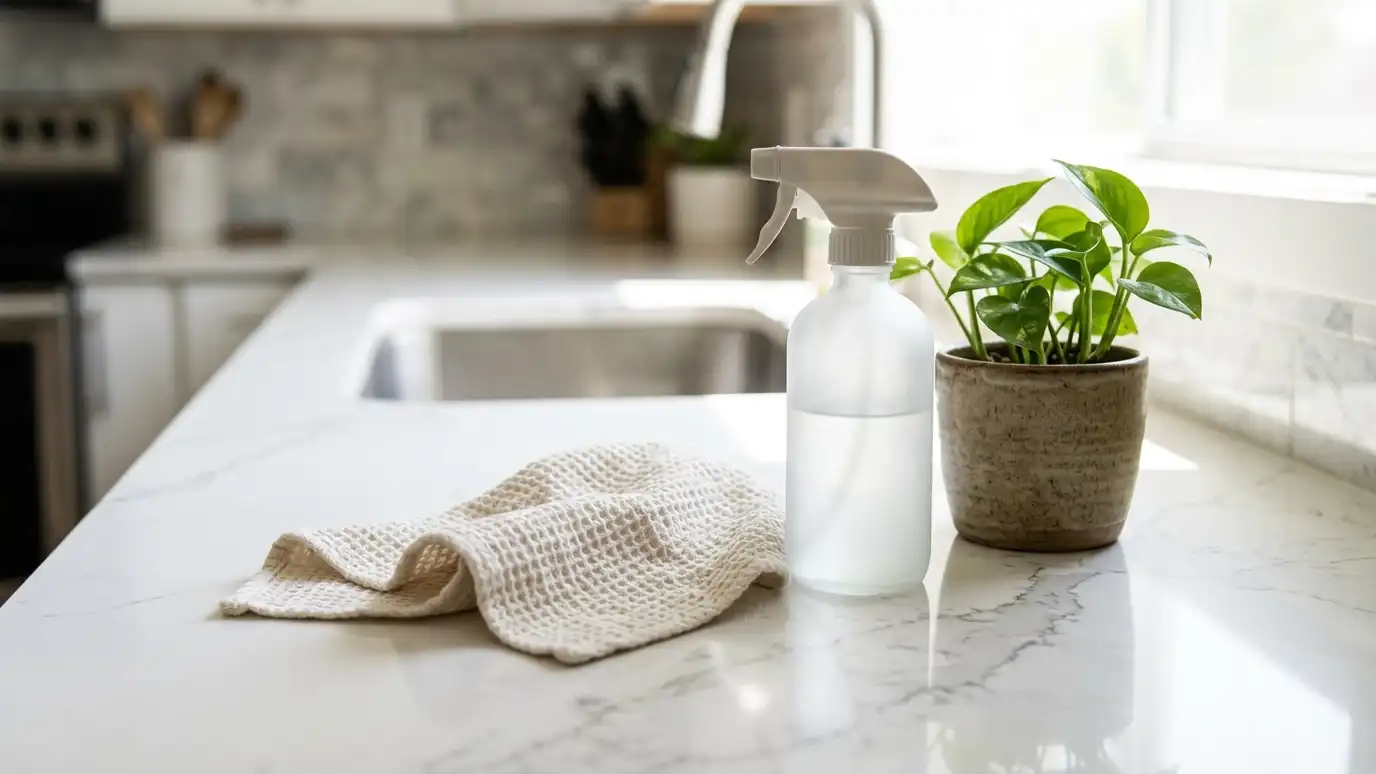
Keep a small kit near the sink: a soft cloth, mild soap, a spray bottle with water and a bottle of the cleaner that suits your surface. Having it handy makes daily care quick.
Cleaning natural stone
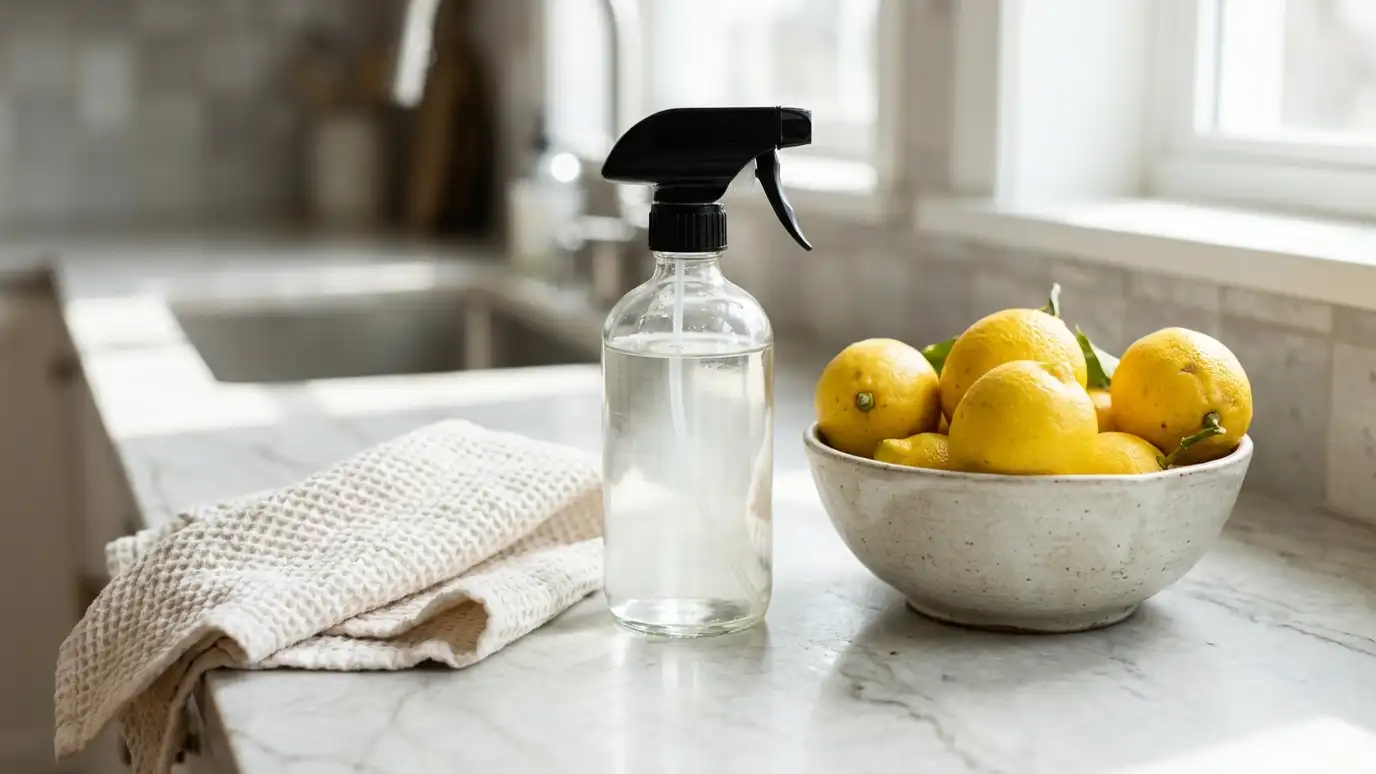
Use a pH-neutral stone cleaner or mild dish soap and warm water. Avoid vinegar, lemon and acidic cleaners, which can etch marble and some other stones.
Skip abrasive pads and powders.
Dry the surface to avoid water spots.
Do not use a steam cleaner or a pressure device on counters. It can force water into seams and damage sealers and finishes. A soft cloth and mild soap are enough.
Cleaning quartz and porcelain
Mild soap and water works. For stuck-on spots, a soft scrubber or a non-abrasive cleaner helps. Avoid harsh chemicals and strong solvents on quartz.
Do not use hot pans directly on quartz.
Porcelain is more forgiving, but still use trivets for protection.
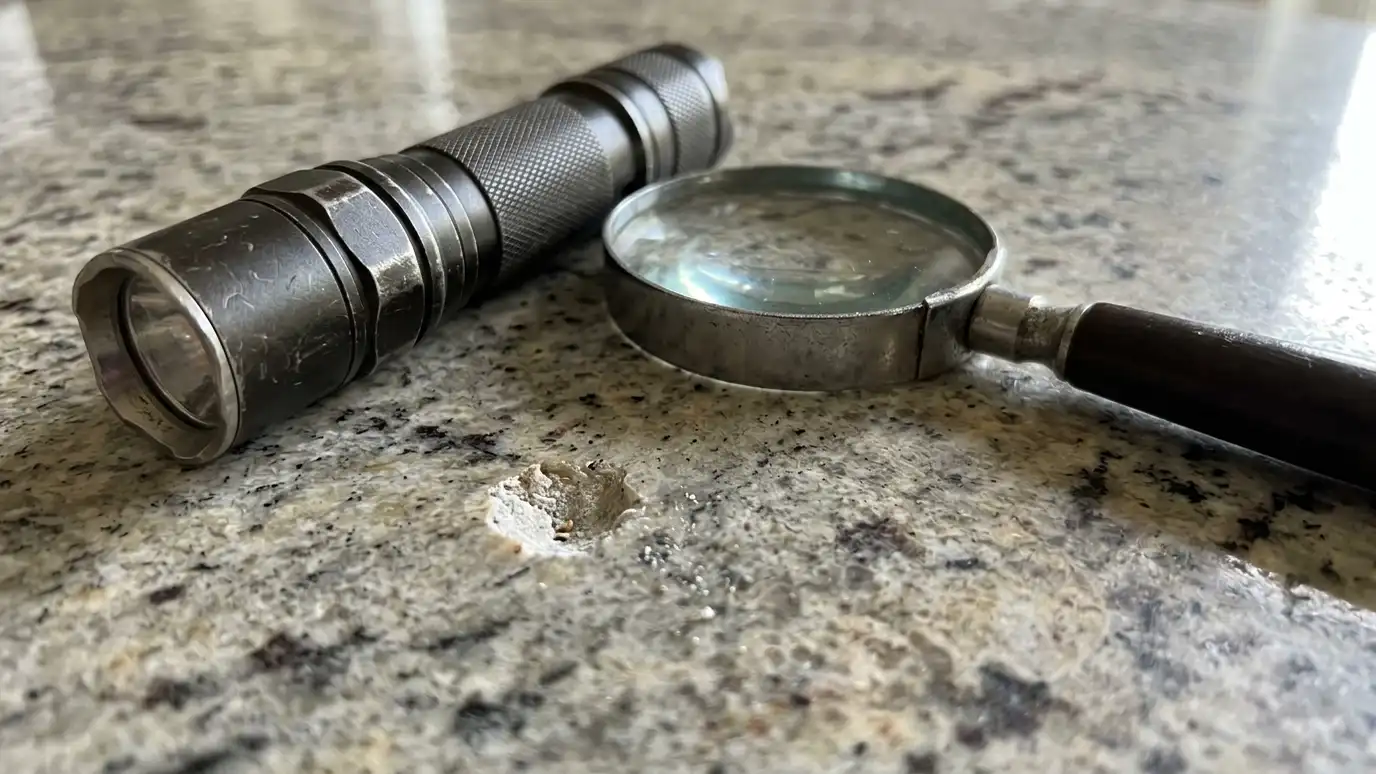
Take a photo of any stain or dull spot when you first see it. Comparing photos over time shows whether it is growing, and it helps us understand what you saw.
Sealing stone
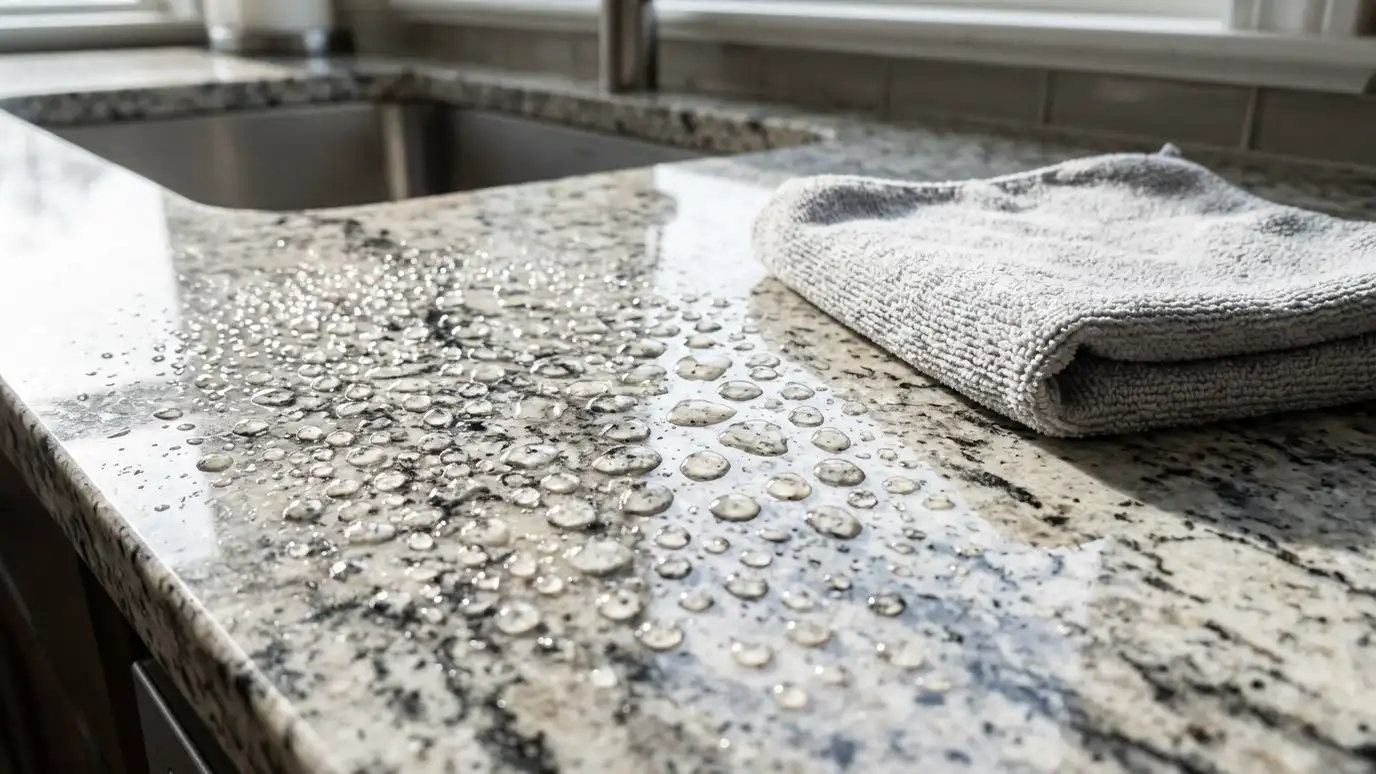
Natural stone should be sealed after installation and again as needed. A simple water test shows when: if drops soak in and darken the stone, it is time.
Apply the sealer to a clean, dry surface and wipe off the excess.
Allow it to cure before heavy use.
Cutting on stone dulls knives and can scratch softer surfaces. Use a cutting board for every task, and keep hot pans on trivets even if the surface is heat resistant.
Wood, laminate and solid surface
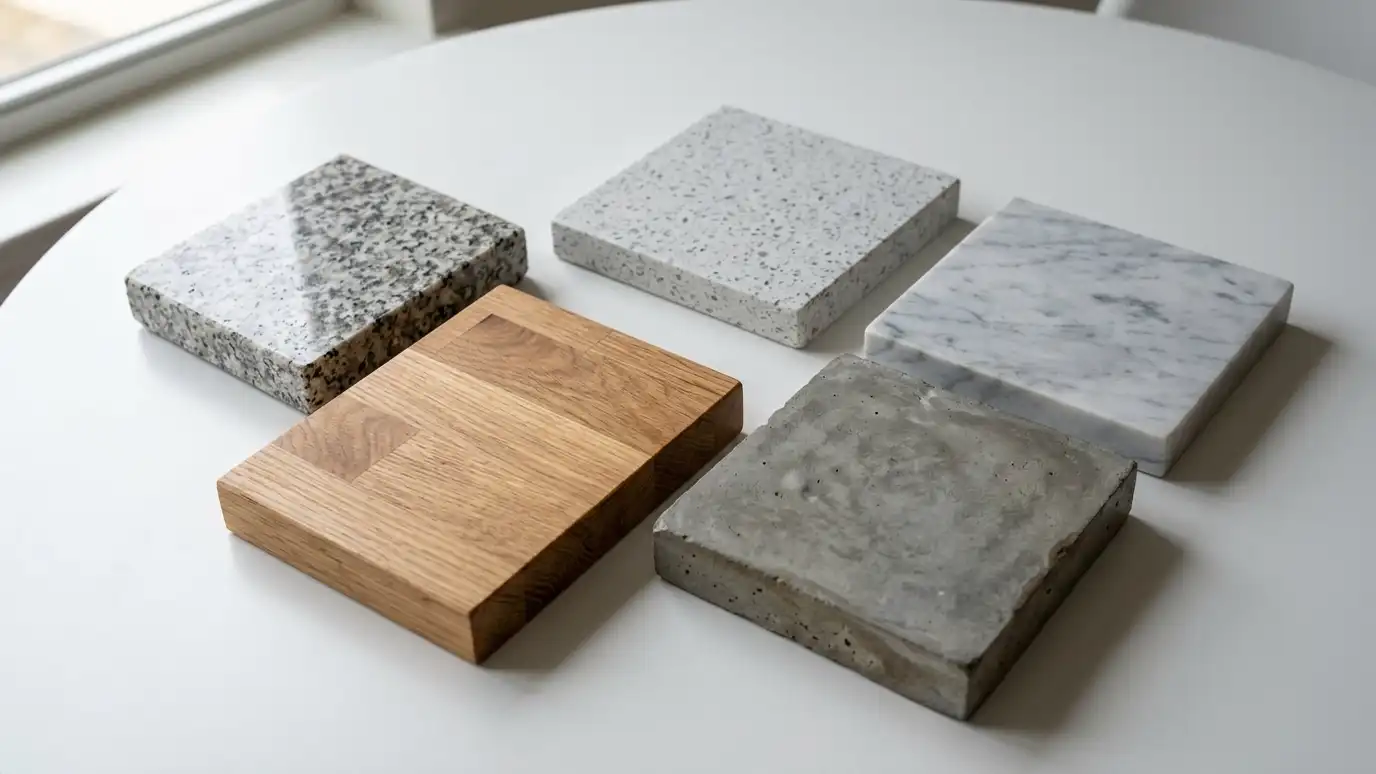
Wood needs oil or a protective finish and quick wipe-ups near sinks. Laminate wipes clean but must be protected from heat and standing water. Solid surface can be sanded, so scratches are fixable.
Each needs its own gentle cleaner.
Ask us for a routine for your surface.
Check surfaces in rooms you rarely use. A bathroom or a bar can hold a stain or a leak unnoticed for months, and a quick look each season catches problems early.
When to call for help
Call if you see a stain that will not lift, a dull etch, a chip, an opening seam or a loose sink. Early repairs are simpler.
A yearly inspection catches small problems.
Ask about a maintenance plan if you want regular visits.
A written note with the date of each seal and each deep clean turns into a useful history. If you sell the house, that record shows careful ownership.
Use mild cleaners, protect the surface from heat and acid and seal natural stone when the water test says it is time.