Undermount sinks
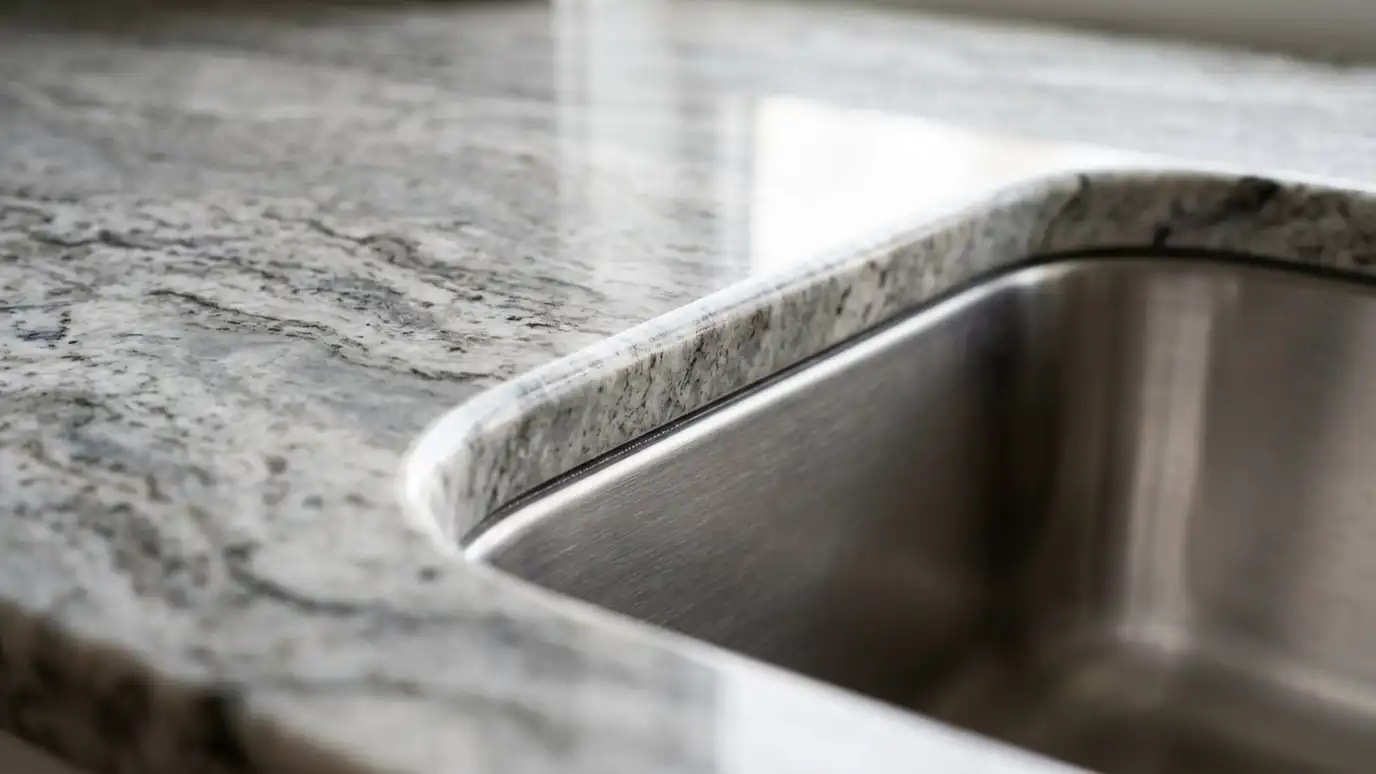
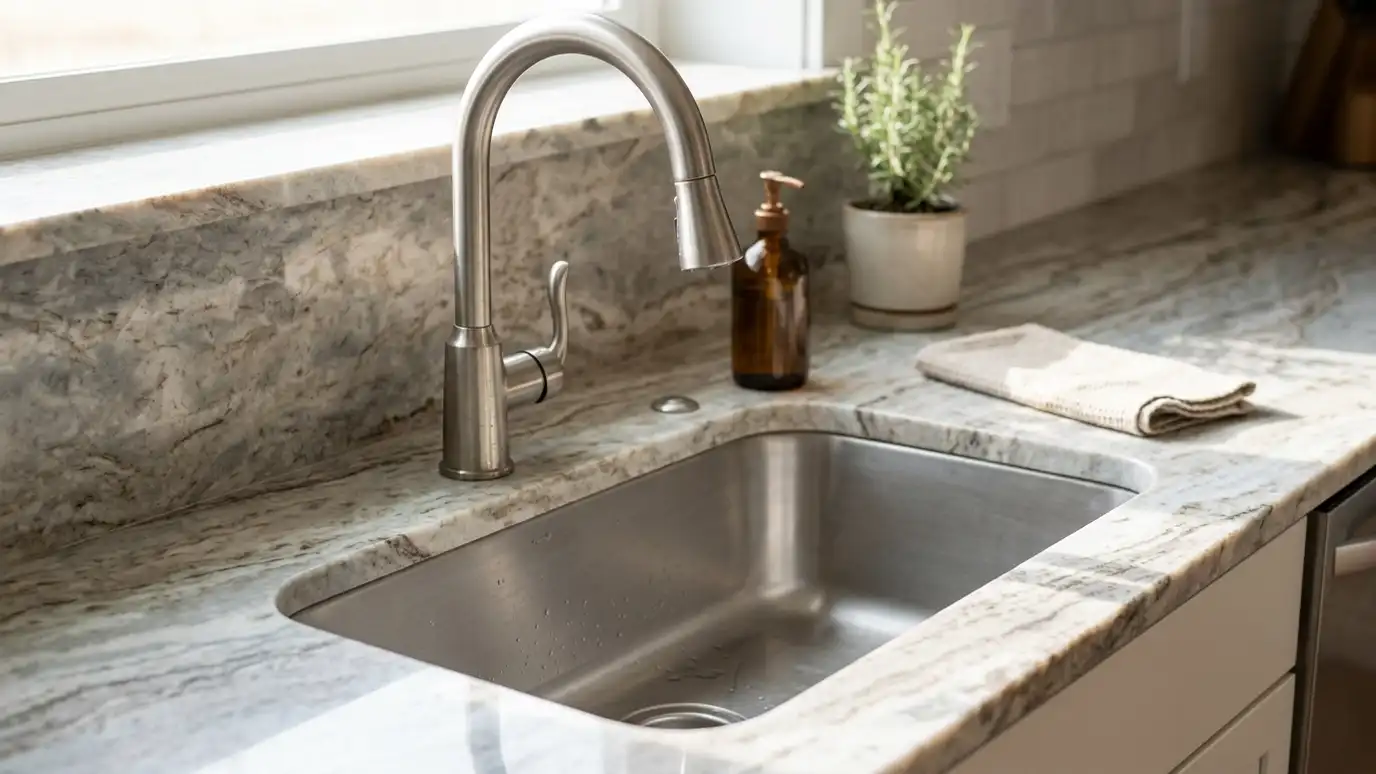
An undermount sits below the countertop, so crumbs sweep into it and the edge is clean. It suits stone, quartz and solid surface.
It needs a precise cutout, a polished reveal and strong support.
It is a popular choice for modern and transitional kitchens.
Check the sink in person if you can. Depth, bowl shape and the width of the lip all matter, and the best sink on paper may not suit the way you wash dishes.
Drop-in sinks
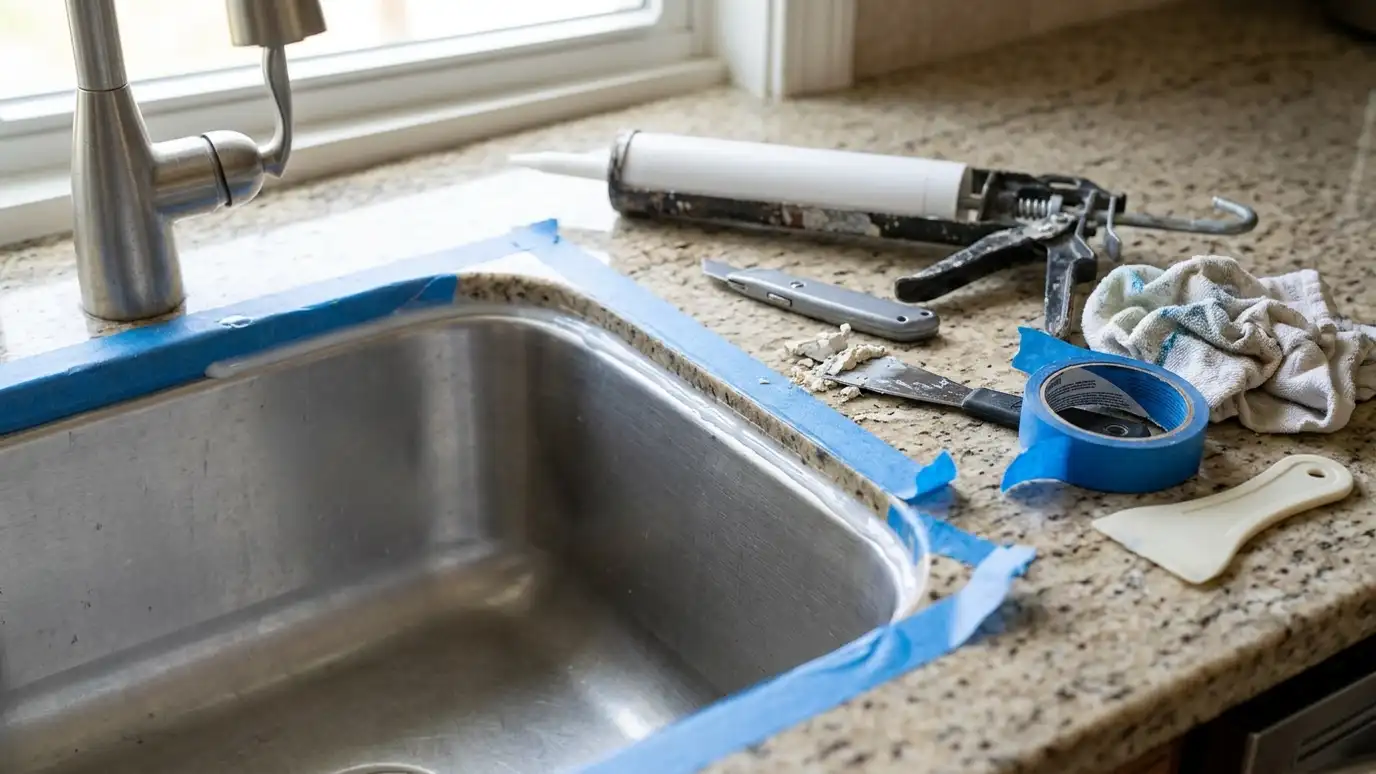
A drop-in sits on top of the countertop with a visible rim. It is simple, works with laminate and wood and is easier to replace.
The rim can collect dirt and the joint needs good sealing.
It suits budget and utility projects.
If you are choosing a drop-in sink, ask whether the rim will be easy to clean and how the joint will be sealed. A neat bead of silicone makes a big difference.
Farmhouse and apron-front sinks
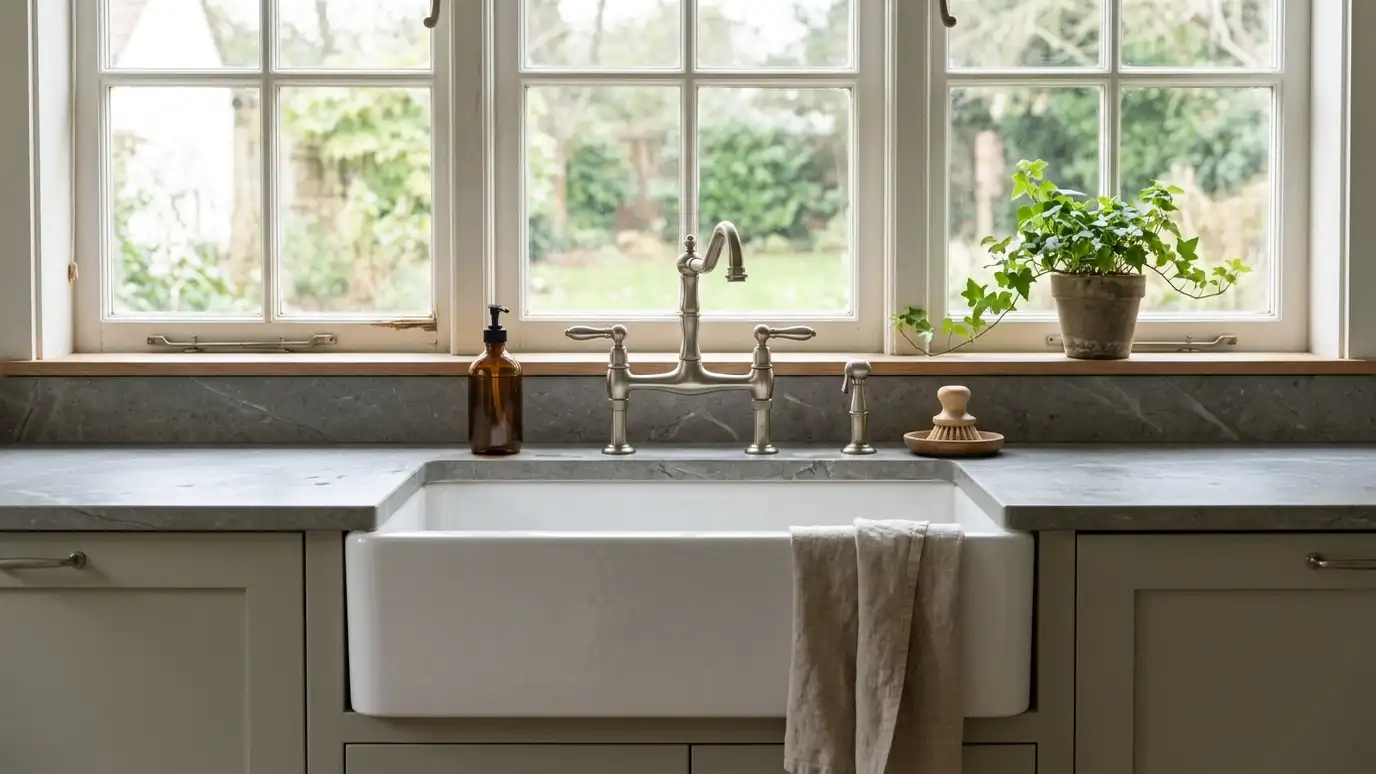
A farmhouse sink shows its broad front above the cabinet. It is deep and charming.
The cabinet must be cut and reinforced, and the sink can be very heavy.
It suits country, traditional and transitional looks.
Apron-front sinks need cabinet changes. Tell your cabinet installer early, because the front of the cabinet is cut and reinforced, and the countertop and the sink must meet cleanly.
Integrated sinks
Solid surface and some other materials can be made with a molded bowl. There is no seam between sink and top.
It is easy to clean and good for hygiene.
The look is seamless and modern.
Integrated sinks look beautiful and clean up easily. Ask about the material and how the bowl is shaped and joined, and ask to see a sample if possible.
Faucets and holes
Faucets need holes in the stone or the sink. Single-hole, widespread and wall-mounted faucets need different layouts. Soap dispensers and sprayers need holes too.
Tell us your faucet model before templating.
Holes are drilled in the shop for accuracy.
Bring the faucet specification to the estimate. The holes, the spacing and the clearance behind the faucet all affect the layout, and the right information avoids surprises.
Support and sealing
A full sink is heavy, so undermount sinks are mounted with strong adhesive and clips. The joint is sealed with silicone.
Cutout corners are rounded to prevent cracks.
Plumbers connect drains and faucets after the top is set.
Ask your plumber to schedule right after installation. A sink that is set and sealed should wait for the adhesive to cure before heavy use, and good timing keeps your kitchen out of service for as short a time as possible.
Choose the sink and faucet before templating so the cutouts and holes are right the first time.