The basic difference
Granite is cut from the earth, and each slab is unique. Quartz is made in a factory from ground quartz and resin, so patterns are consistent. That one difference explains most of the others.
Both are popular, both are durable and both look beautiful when installed well.
The right choice depends on what you value.
A useful test is to imagine a normal week in your kitchen. If you often set hot pans straight on the counter, granite fits better. If you hate the idea of sealing, quartz fits better. The right answer often shows up quickly.
Looks
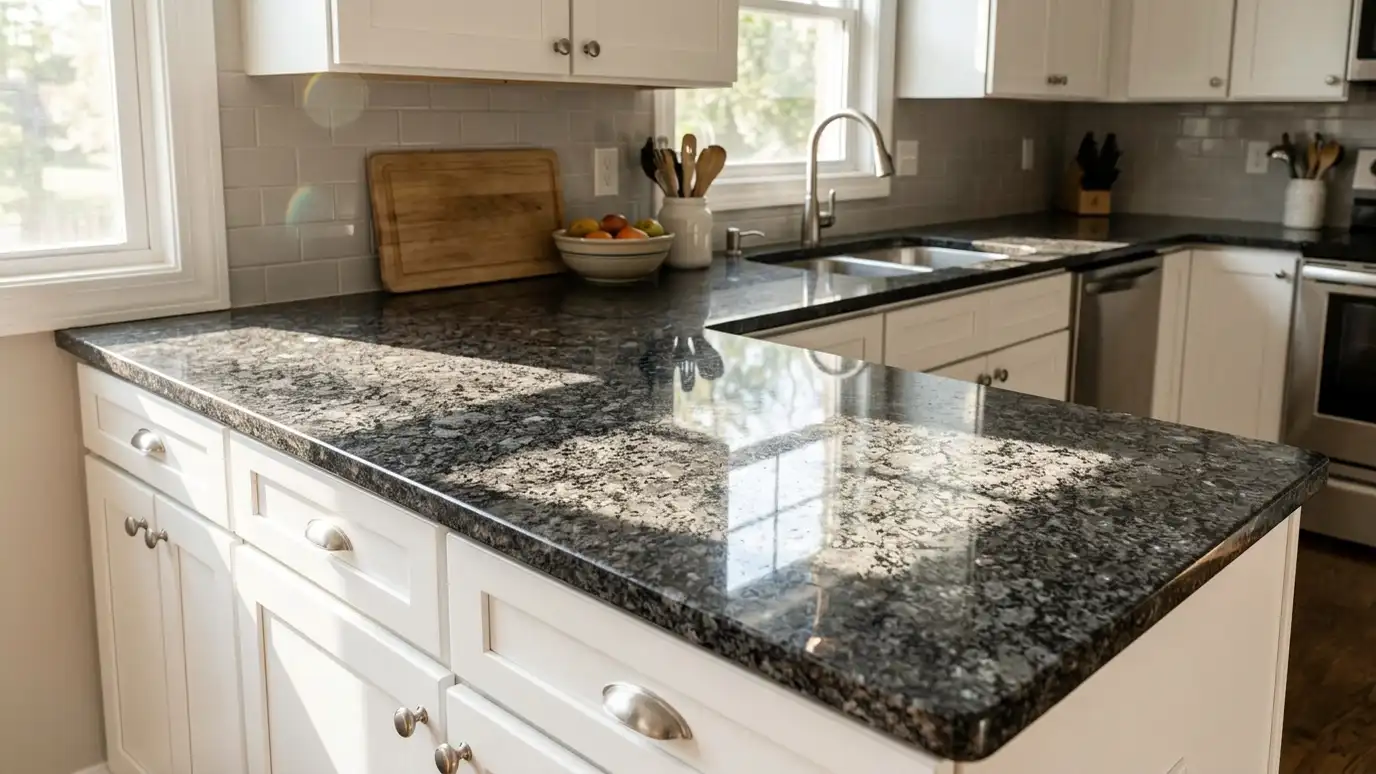
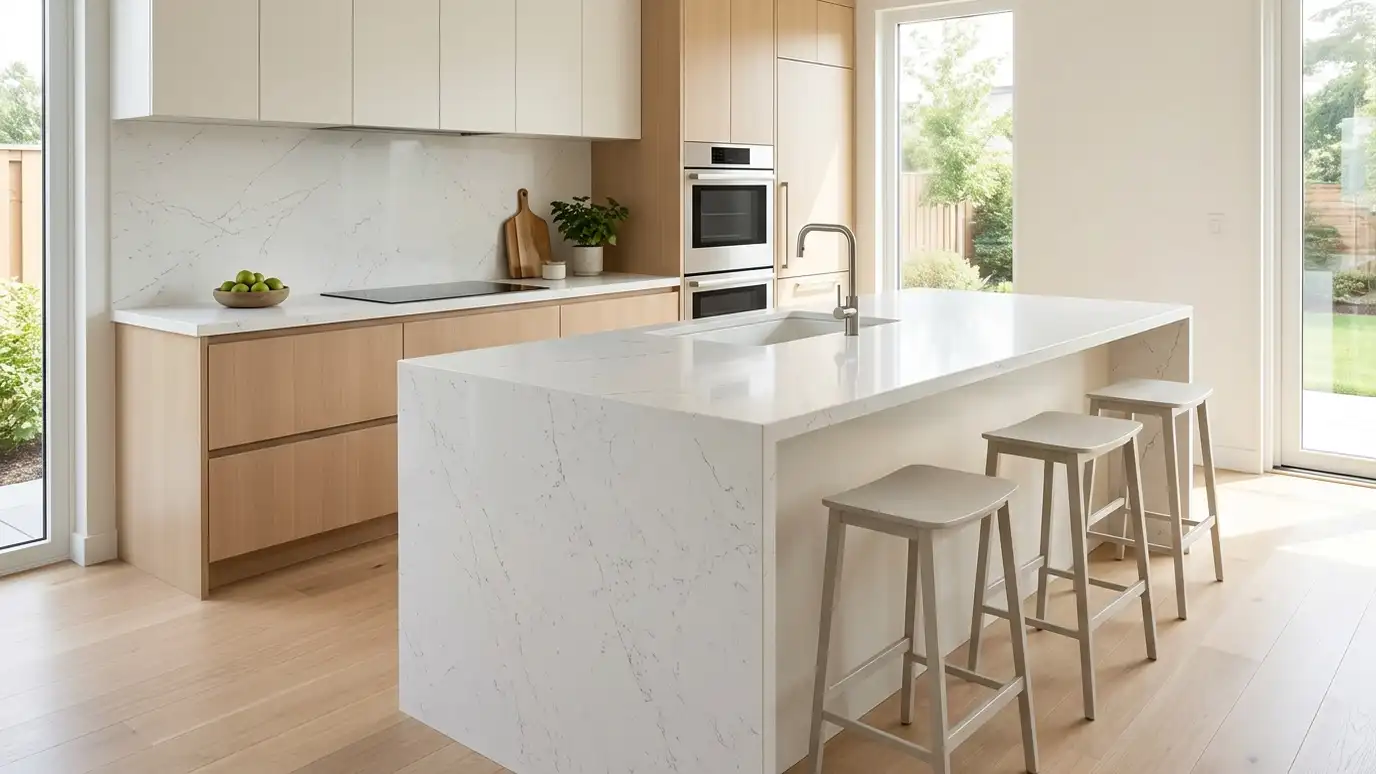
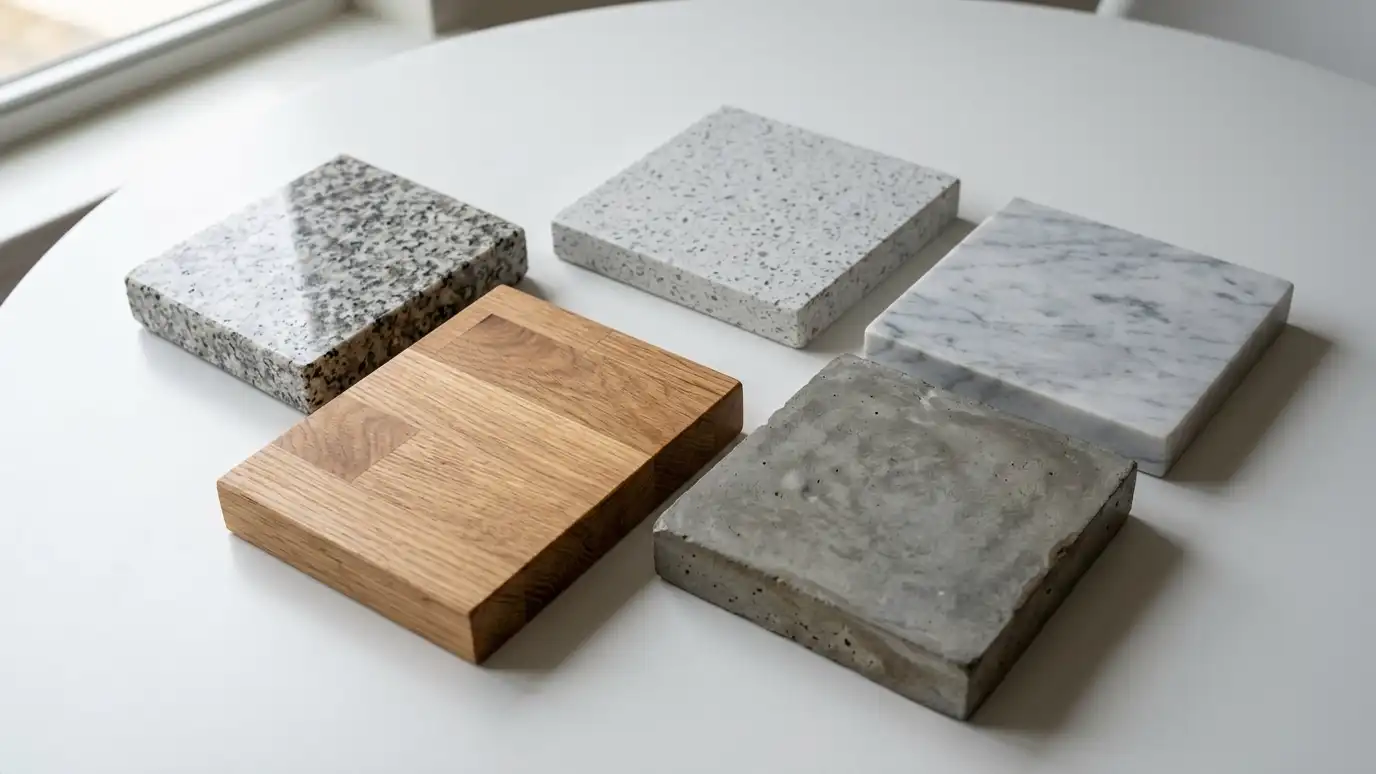
Granite has natural movement, flecks and variation, so you choose the exact slab. Quartz offers uniform color or repeating veining, and it can imitate marble or concrete.
Natural stone appeals to people who love variation. Quartz appeals to people who love consistency.
We recommend seeing full slabs of both.
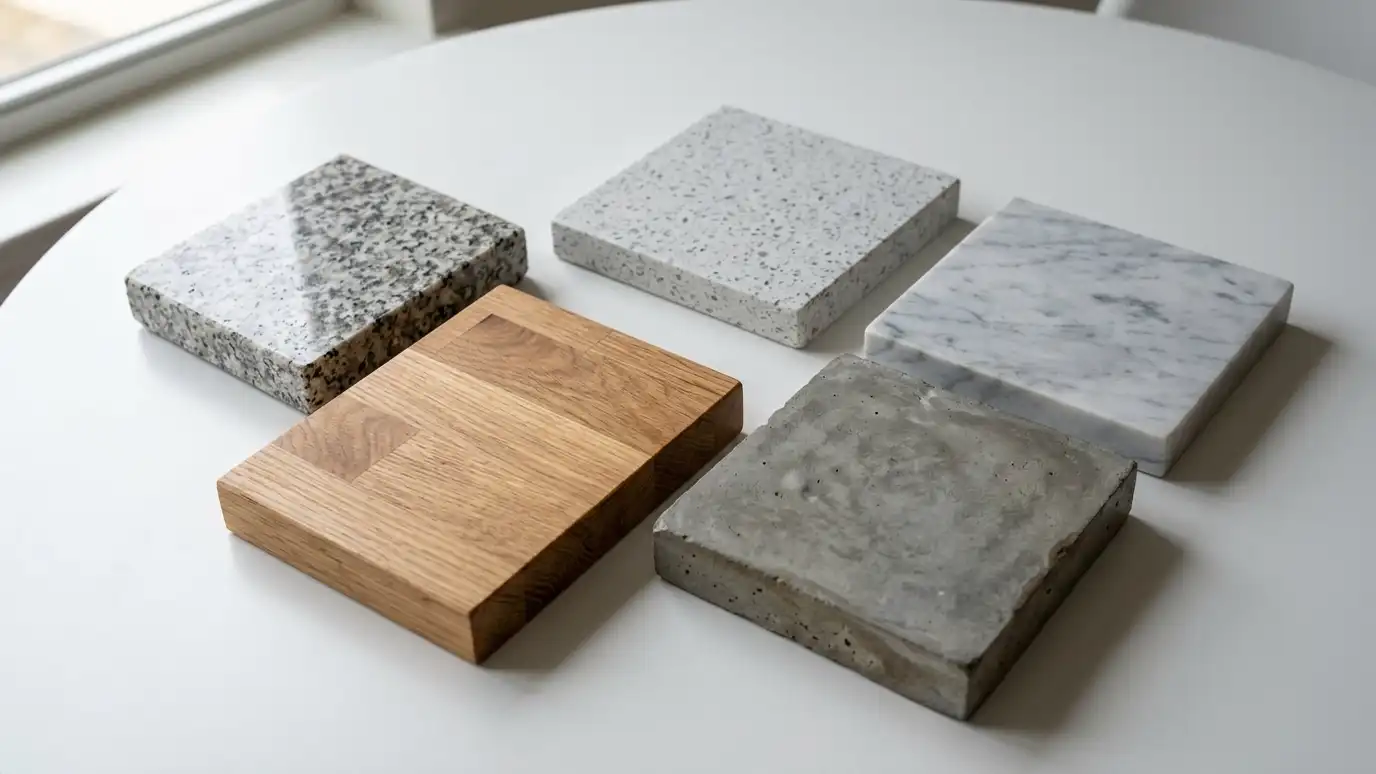
Bring home samples of both and look at them in the morning and evening. Spill a little water and oil on each. The way they look and clean in daily light tells you more than a showroom can.
Heat and sun
Granite handles heat well and can be used outdoors. Quartz resin can scorch under very hot pans and can fade in strong sunlight, so it suits indoor use best.
Trivets are wise with both.
Outdoor kitchens usually call for granite or porcelain.
Remember that quartz patterns may repeat across a large slab, while granite patterns are one of a kind. Which one feels more like you is a personal call, and both are good options.
Stains and sealing
Quartz is non-porous and does not need sealing. Granite is slightly porous, so it is sealed after installation and again as needed.
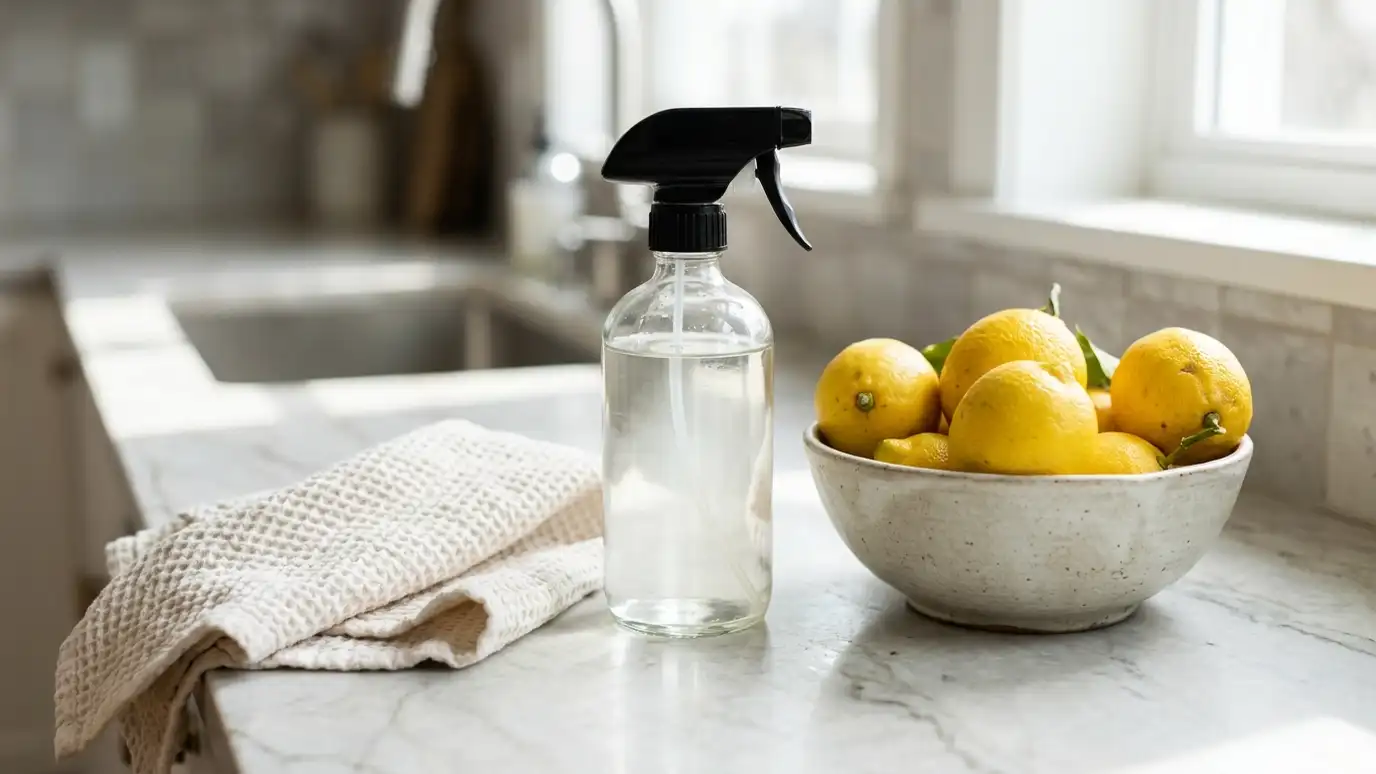
Sealed granite resists most stains, and a water test shows when it needs resealing.
Quartz is the lower upkeep choice.
Ask each company how they seal granite and what product they use, and how they handle quartz seams. The answers tell you about the quality of the shop.
Seams and slabs
Both come in large slabs, and seams are similar. Quartz patterns can repeat, which helps with matching. Granite patterns vary, so matching takes planning.
Either can have waterfall edges and special details.
A good fabricator plans the layout on the slab.
If you cook outdoors or in a sunny room, granite or porcelain handles the sun better. If the room is shady and indoor, quartz is a safe choice. Think about where the surface will live.
Which should you choose
Choose granite if you love natural variation, cook with high heat or want an outdoor surface. Choose quartz if you want consistency and low upkeep.
Many homes use both.
We help you compare real slabs in your kitchen.
Remember that you can mix them. Many kitchens have granite on the perimeter and quartz on the island, or the reverse, and the combination can look intentional and rich.
Choose granite for natural variation and heat tolerance, and quartz for consistency and low upkeep, after seeing full slabs.