Water and bathrooms
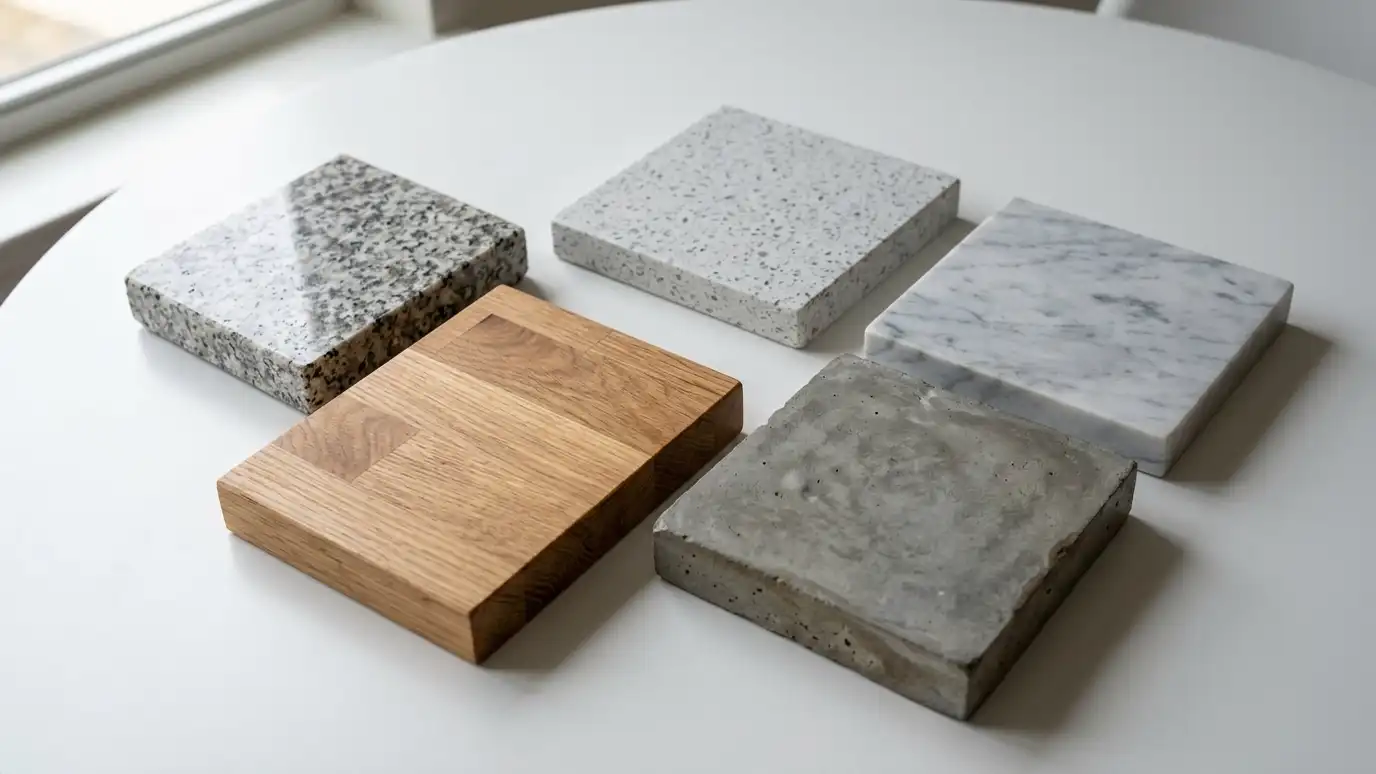
Bathroom tops live with water, soap, toothpaste and cosmetics. Quartz and solid surface resist these well. Natural stone looks beautiful with sealing and care.
Marble can etch from products.
Choose by how the bathroom is used.
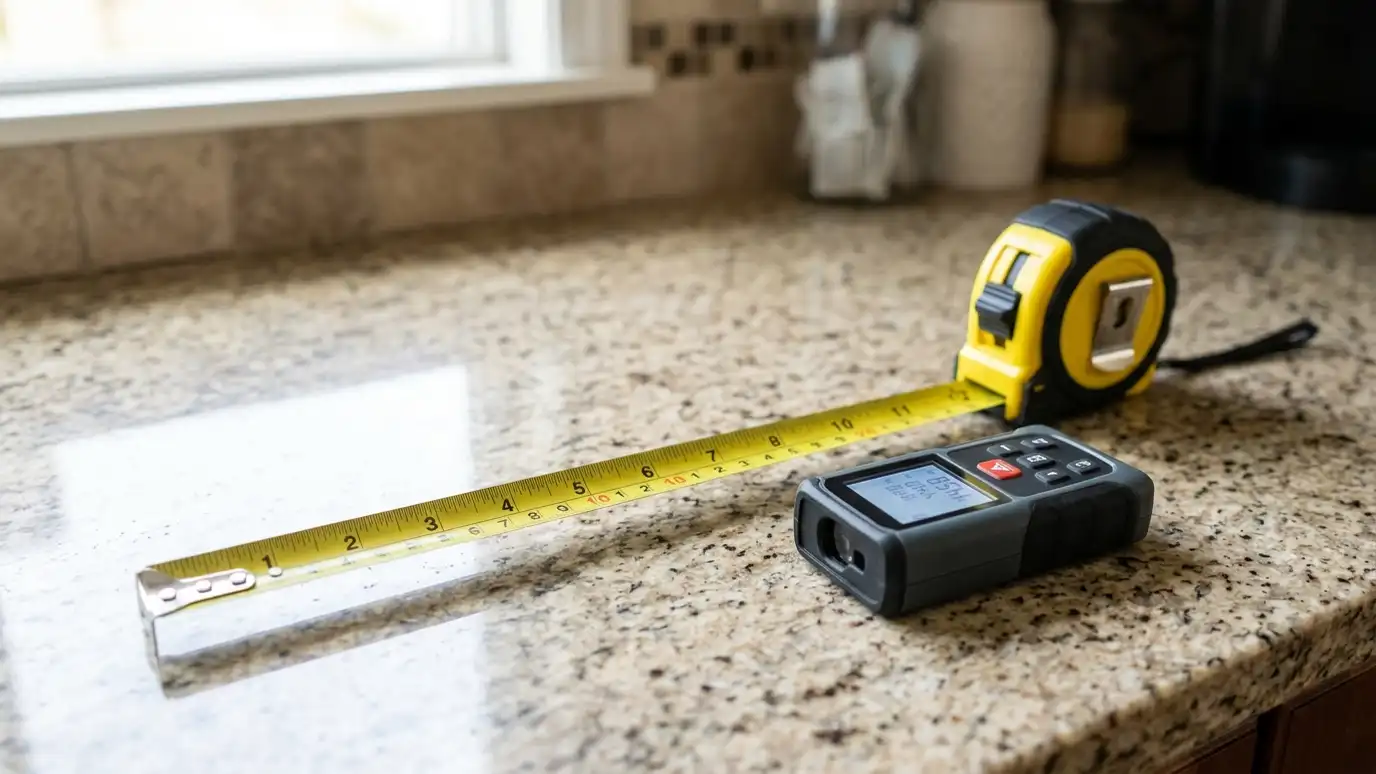
Measure your mirror and light fixtures before choosing a splash height. A tall splash can collide with a mirror or a sconce, and a quick check avoids a surprise.
Sink style
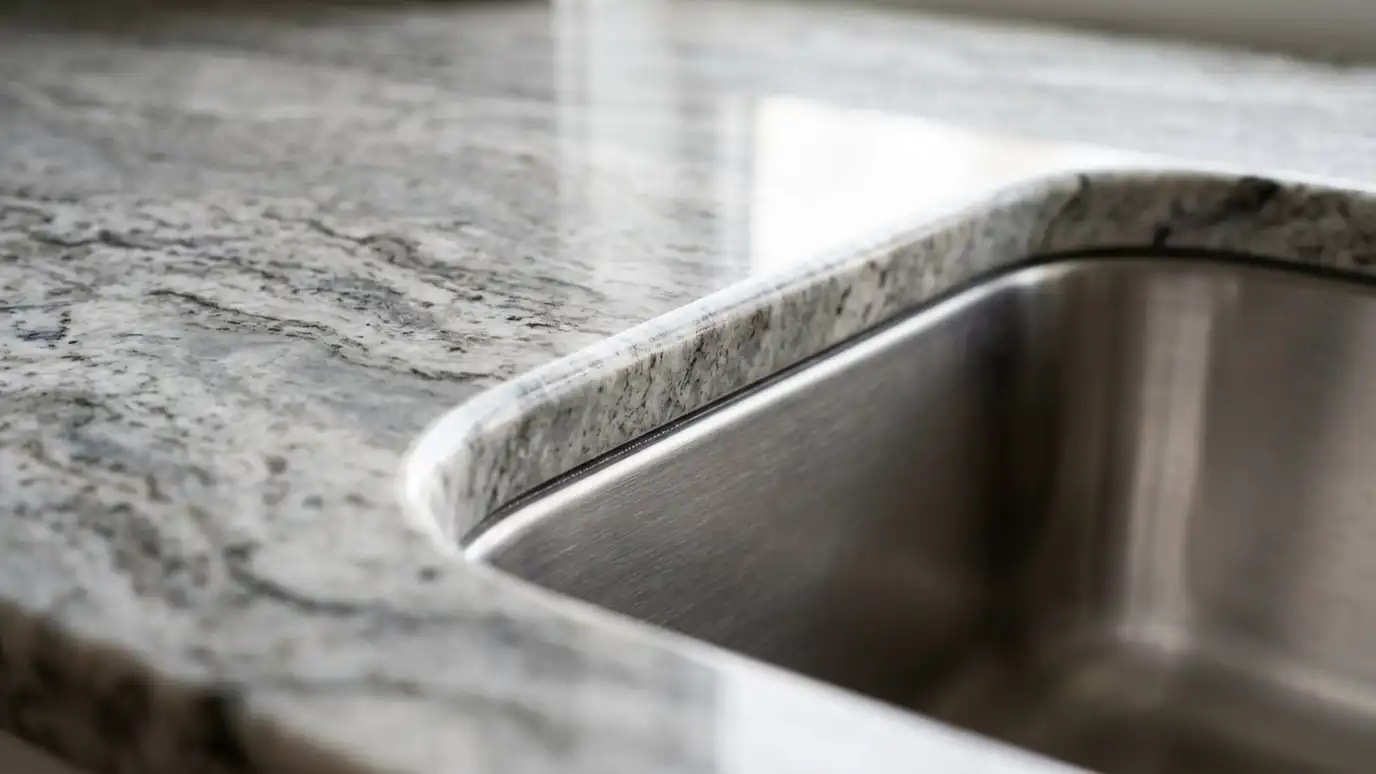
Undermount sinks look clean. Vessel sinks sit on top. Integrated sinks have no seam. Drop-in is simple.
Each needs a different cutout and support.
Choose the sink before the top.
Think about how you use the vanity. A cosmetics counter may want a smooth, easy-clean surface, and a children bathroom may want rounded edges and sturdy materials.
Faucet layout
Single-hole, widespread and wall-mounted faucets need different holes and spacing. Mounted faucets need space behind.
Tell us the model.
Holes are drilled in the shop.
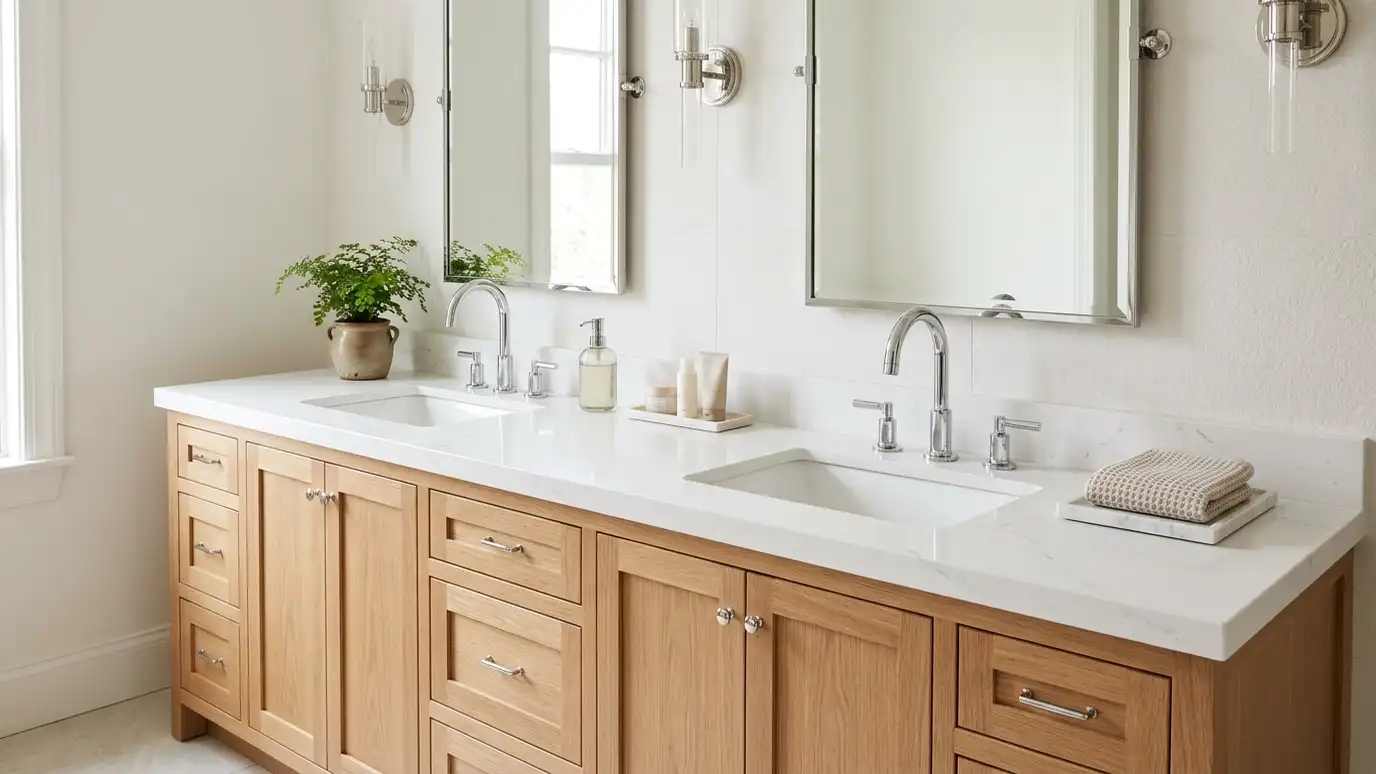
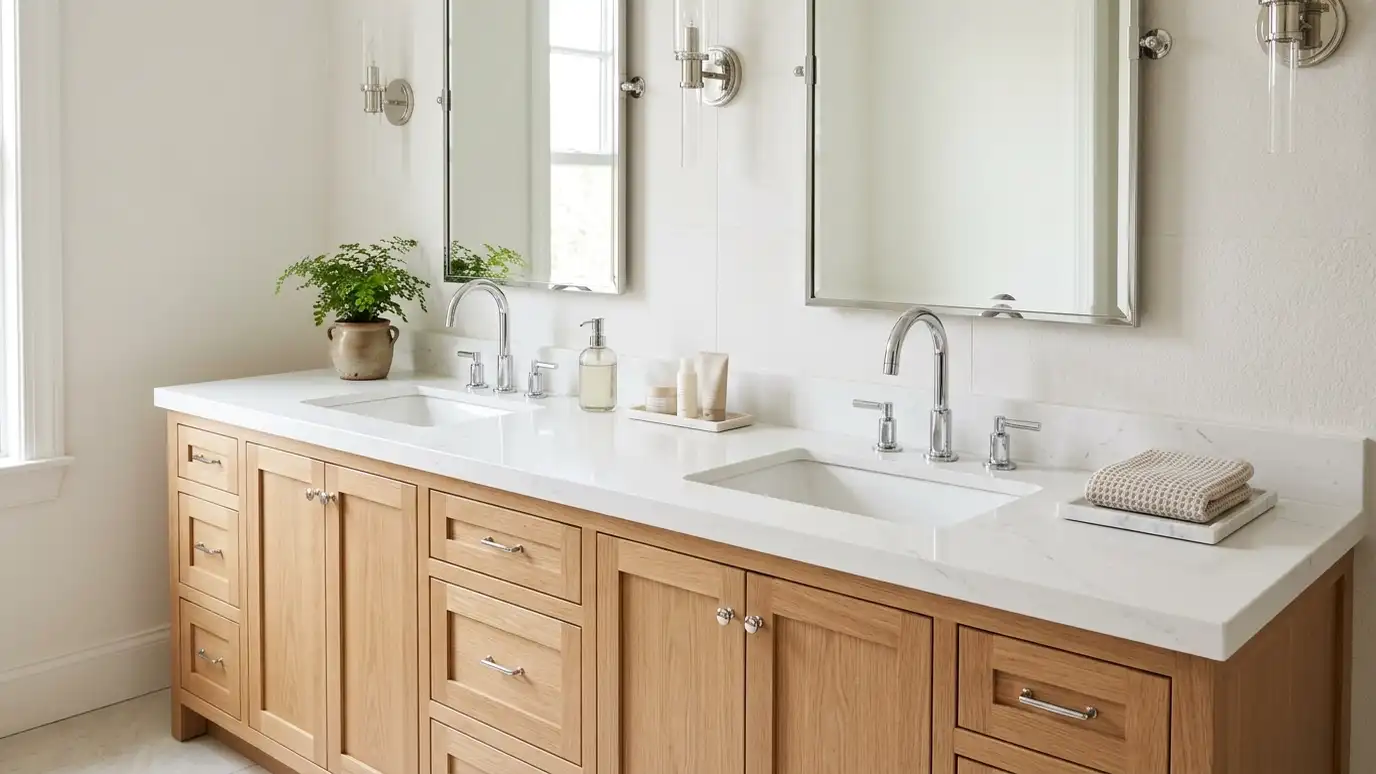
If you have a double vanity, ask about seams. A long slab may avoid one, and a seam can be planned between the sinks where it is least noticeable.
Splashes and edges
A four-inch splash protects the wall. A full-height splash looks bold. Edges can be simple or decorative.
Seal the joint at the wall.
Keep style consistent with the shower.
Ask about the shape of the sink bowl and the depth. A deep bowl is handy, and a shallow bowl saves space. Bring the model number to the estimate.
Single, double and floating
Double vanities need seams or a long slab. Floating vanities need strong supports.
We plan for plumbing and mirrors.
Measure the cabinet carefully.
Plan for the faucet height. A tall faucet needs a deep bowl to avoid splashes, and a short faucet suits a vessel sink. The sink and faucet should be chosen together.
Care
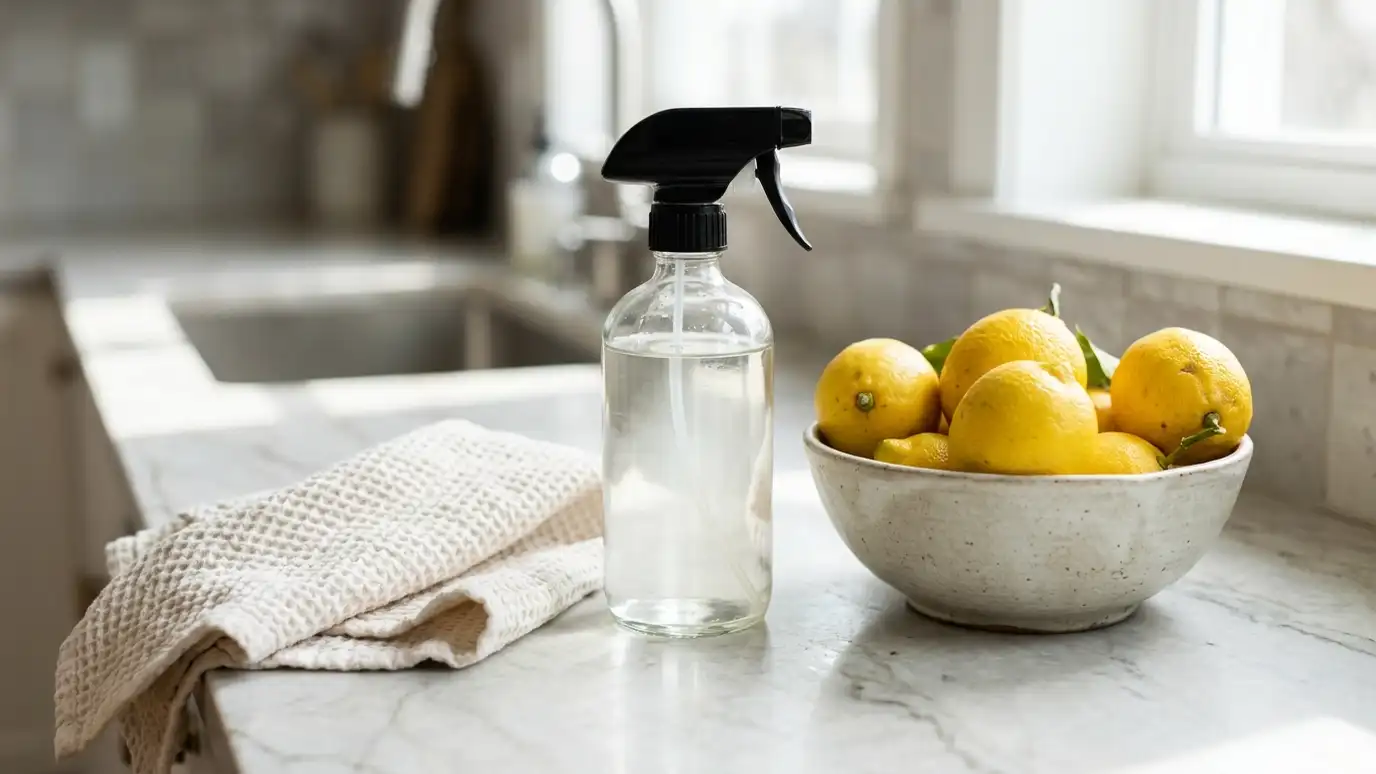
Wipe splashes and wipe dry. Use mild cleaners. Reseal stone as needed.
Avoid harsh chemicals.
Ask about our care guide.
Replace old silicone around the sink and splash once in a while. A fresh bead keeps water out of the cabinet and keeps the vanity looking new.
Choose the sink and faucet first, pick a material that suits wet use and seal the joint at the wall.