Chips
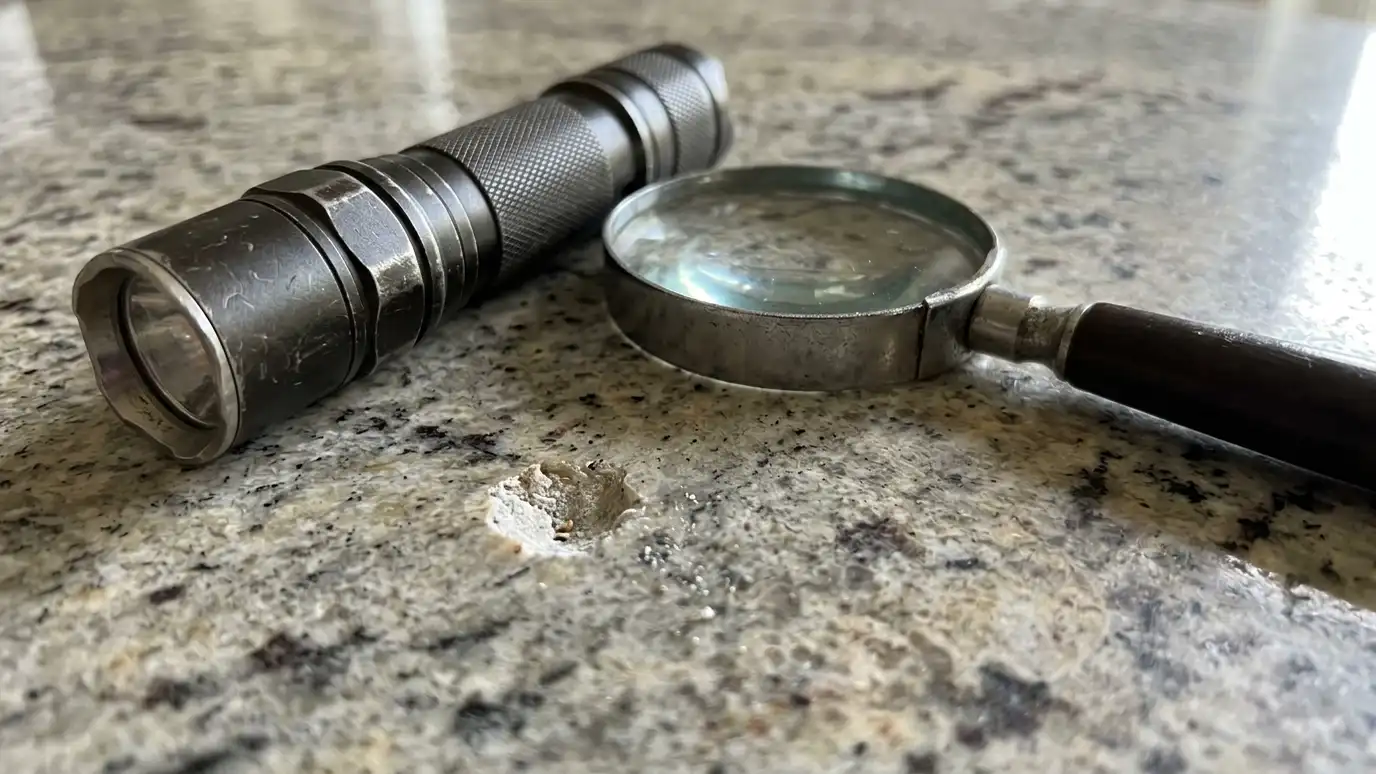
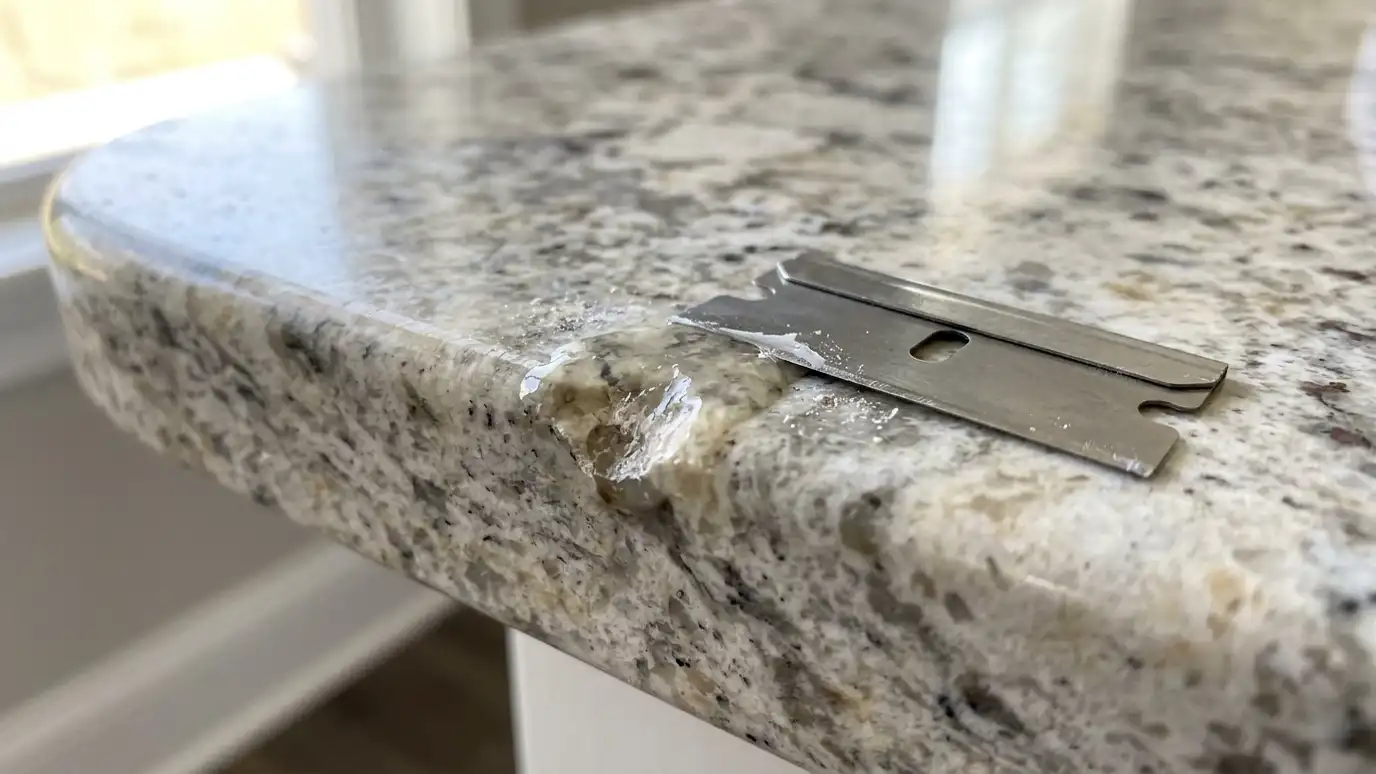
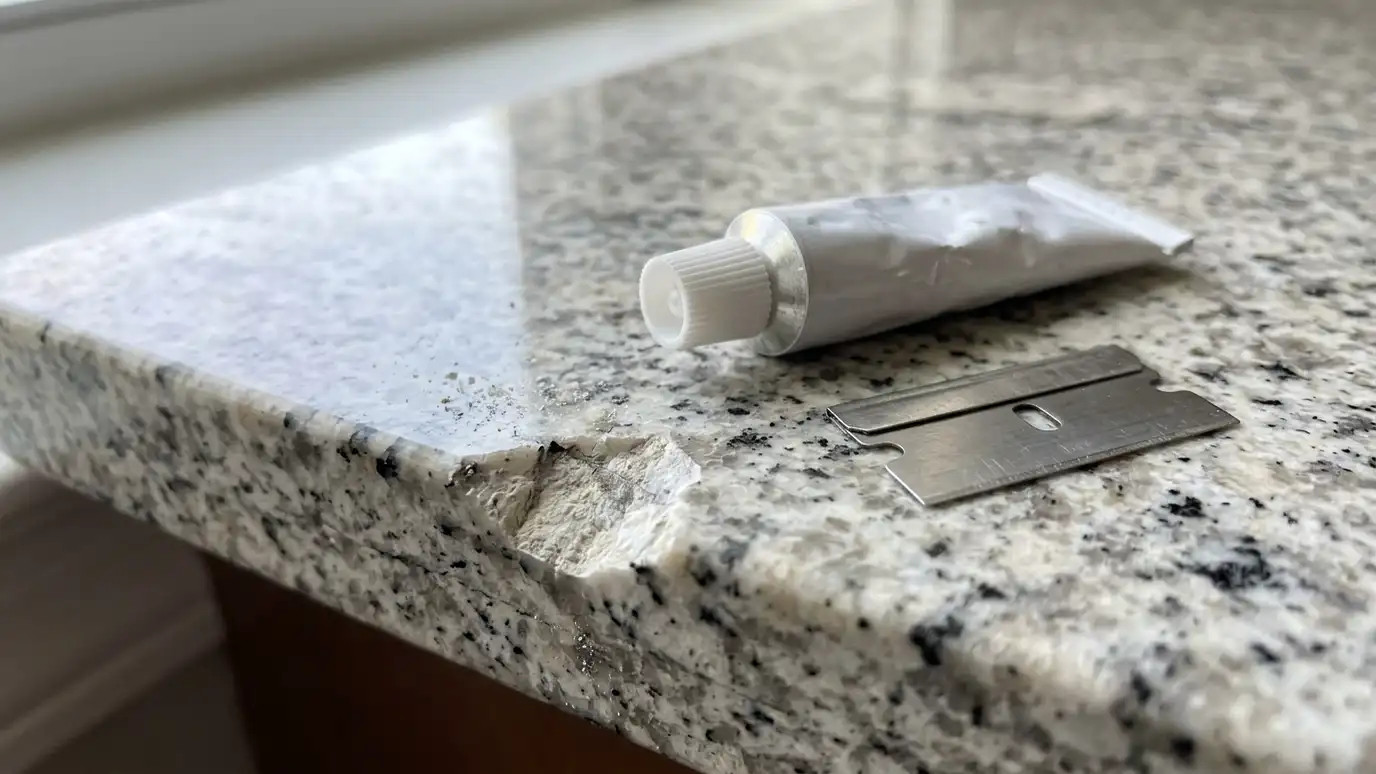
A chip on an edge or corner usually comes from an impact. It can be filled with color-matched resin, sanded and polished until it is hard to see.
Keep the chip piece if you can, since it can sometimes be glued back.
Round edges chip less often.
When a chip happens, save the piece if you can, wrap it in a paper towel and keep it dry. It can sometimes be glued back for the best result, and it gives us a color reference.
Cracks
Hairline cracks may be natural fissures or stress cracks. Stress cracks near sinks and cooktops often come from flex or heat. Stable cracks can be filled. Long structural cracks may need a new piece.
Finding the cause matters.
Do not put weight on a cracked section.
If you see a crack, mark the ends lightly with a pencil and note the date. Marking the ends shows whether the crack is growing, which helps decide on the repair.
Stains and etches
A stain is absorbed color and can often be lifted with a poultice. An etch is a dull spot from acid and is fixed by polishing.
The two look similar but need different treatments.
Sealing helps with stains, not with etches.
Do not try to scrub a stain with abrasive powders or bleach. They can make the surface dull or set the stain. Wipe, blot and call us if it does not lift.
Burns and scratches
Solid surface can be sanded. Quartz can sometimes be improved. Stone scratches can be polished. Laminate burns are hard to fix.
Test an area first.
Use trivets and cutting boards to prevent repeats.
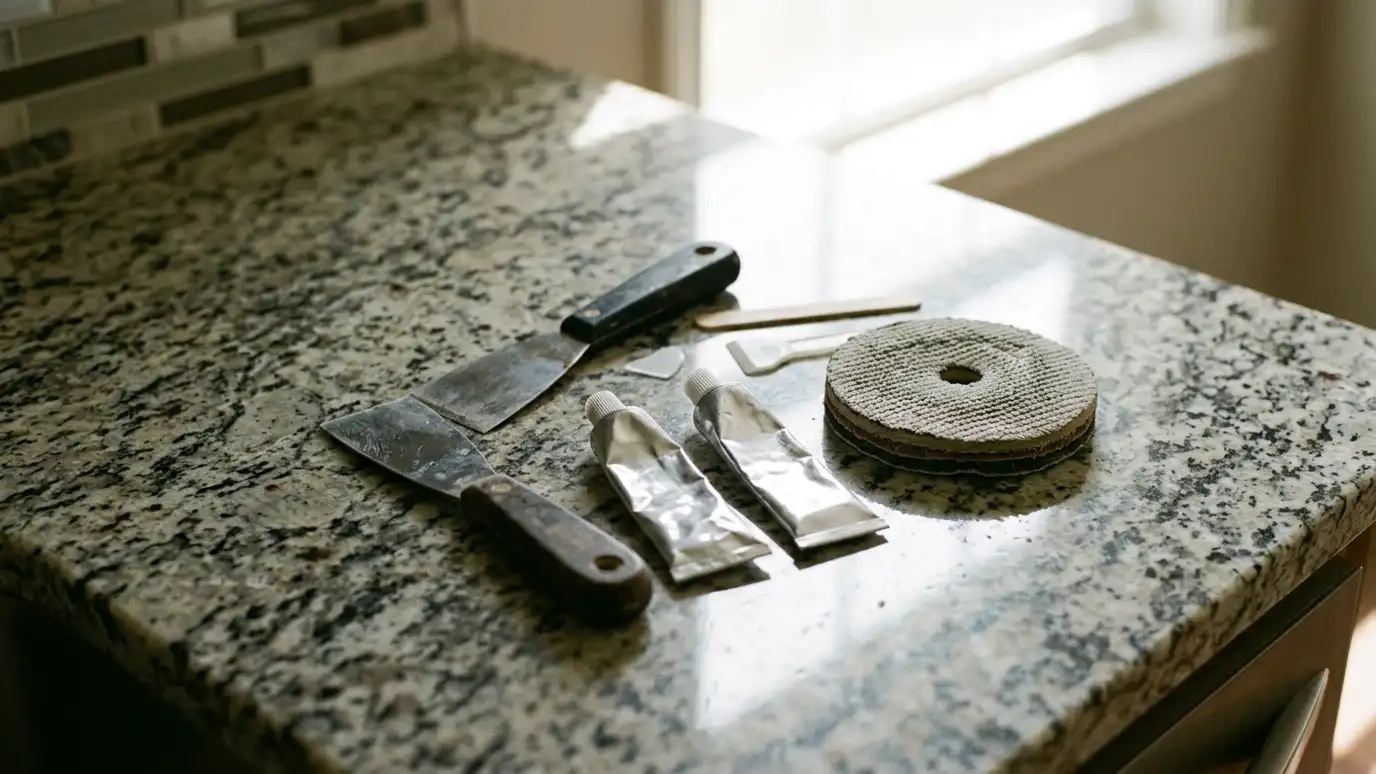
Before you buy a repair kit, check that it suits your material. A kit made for quartz can damage natural stone, and the other way around, and the wrong color filler is hard to undo.
Seams and sinks
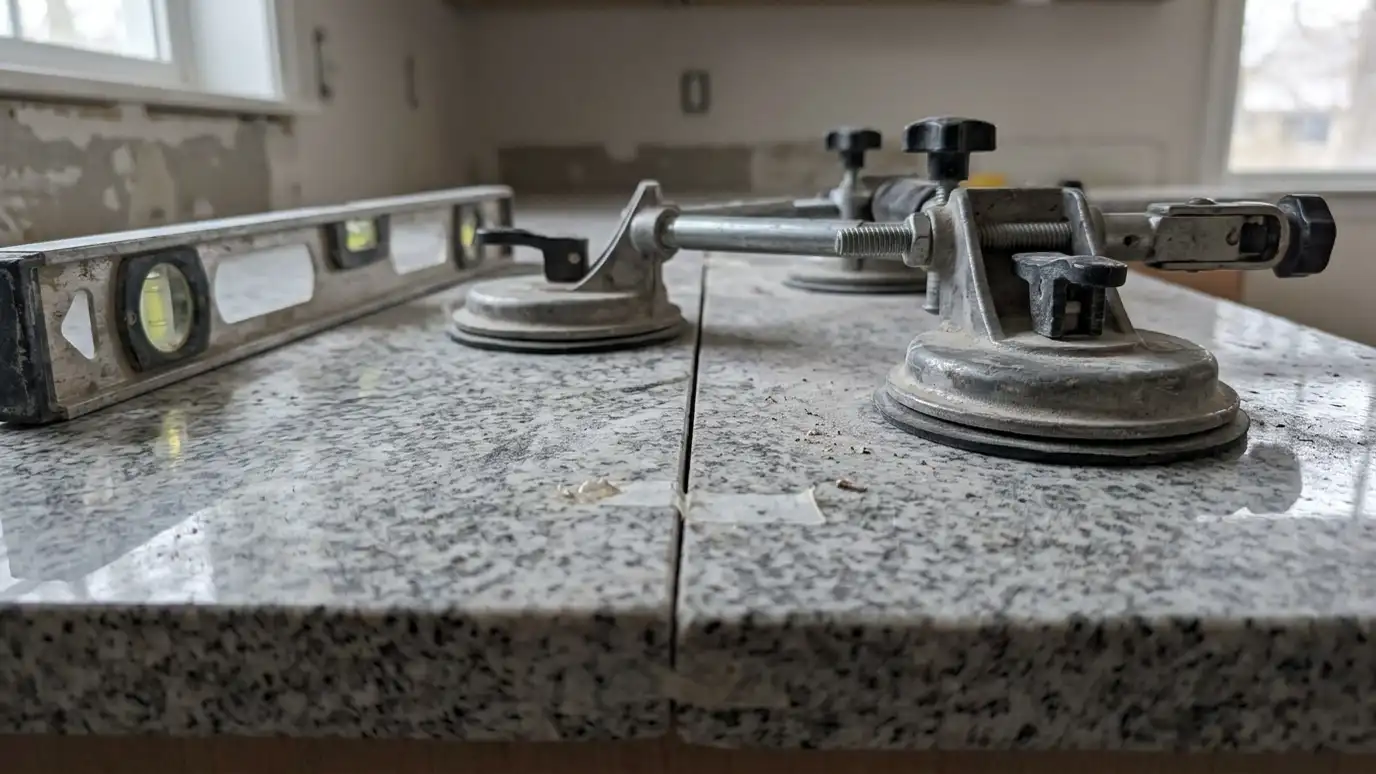
Open or dirty seams can be cleaned, realigned and refilled. Loose sinks can be remounted and resealed.
These repairs are usually quick.
They often point to cabinet movement, which should also be checked.
Photos help us give a faster, more accurate repair opinion. Take close-ups and a wider shot that shows the sink, the seams and the cabinets below.
Repair or replace
Repair makes sense when the surface is sound and the damage is local. Replacement makes sense when the damage is widespread, structural or when many repairs would add up.
We give honest advice and a written comparison.
Ask us if you are not sure.
Ask for a written comparison of repair and replacement when the damage is large. Seeing both in writing helps you decide calmly, and sometimes replacing one section is the best path.
Fix the cause as well as the damage, and choose replacement only when repair no longer makes sense.