Why the edge matters
You touch the edge every day, and it sets the style of the room. A clean edge makes a modern kitchen. A rounded edge feels soft and safe. A decorative edge adds tradition.
The edge also affects chipping, cleaning and cost.
Choose it with the whole room in mind.
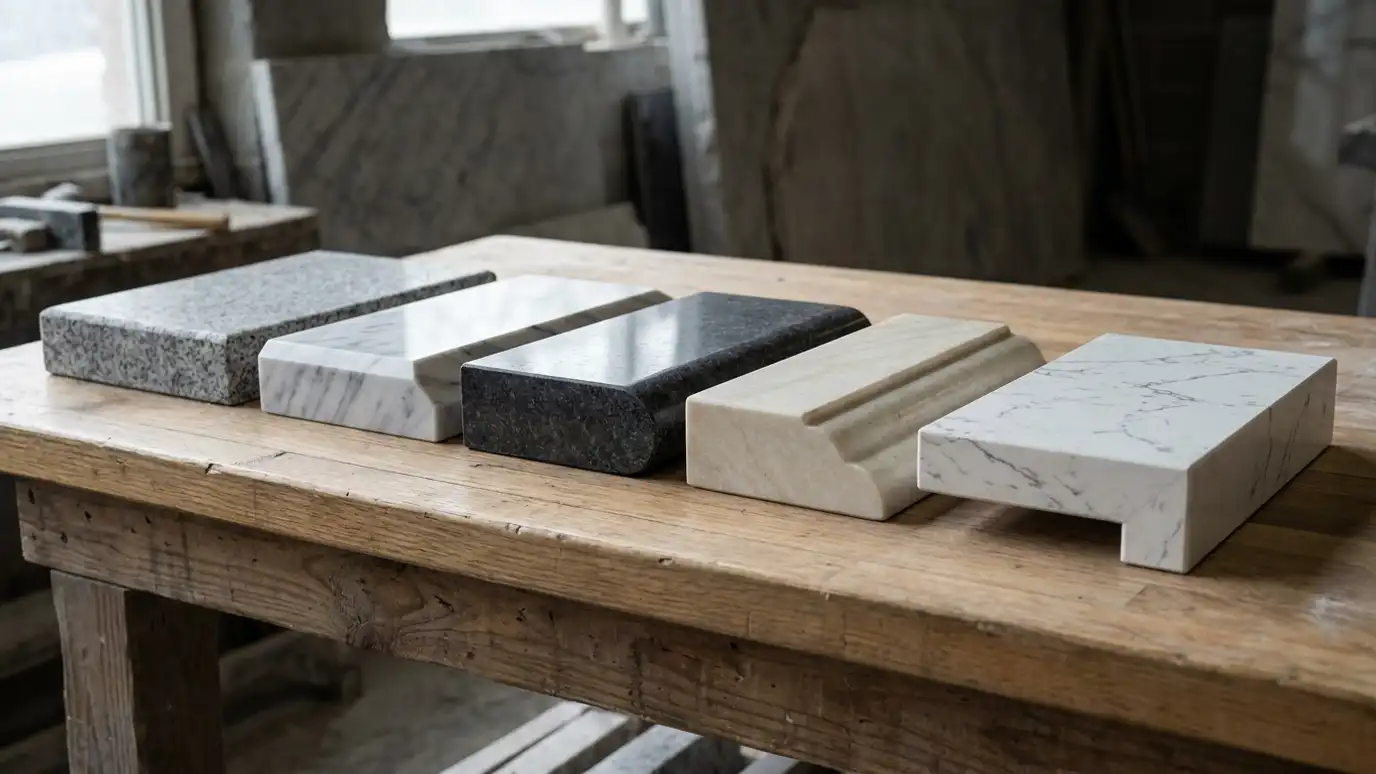
Hold the edge sample in your hand and run your thumb along it. The way it feels is the way it will feel every day, and your family will notice it more than any picture.
Simple profiles
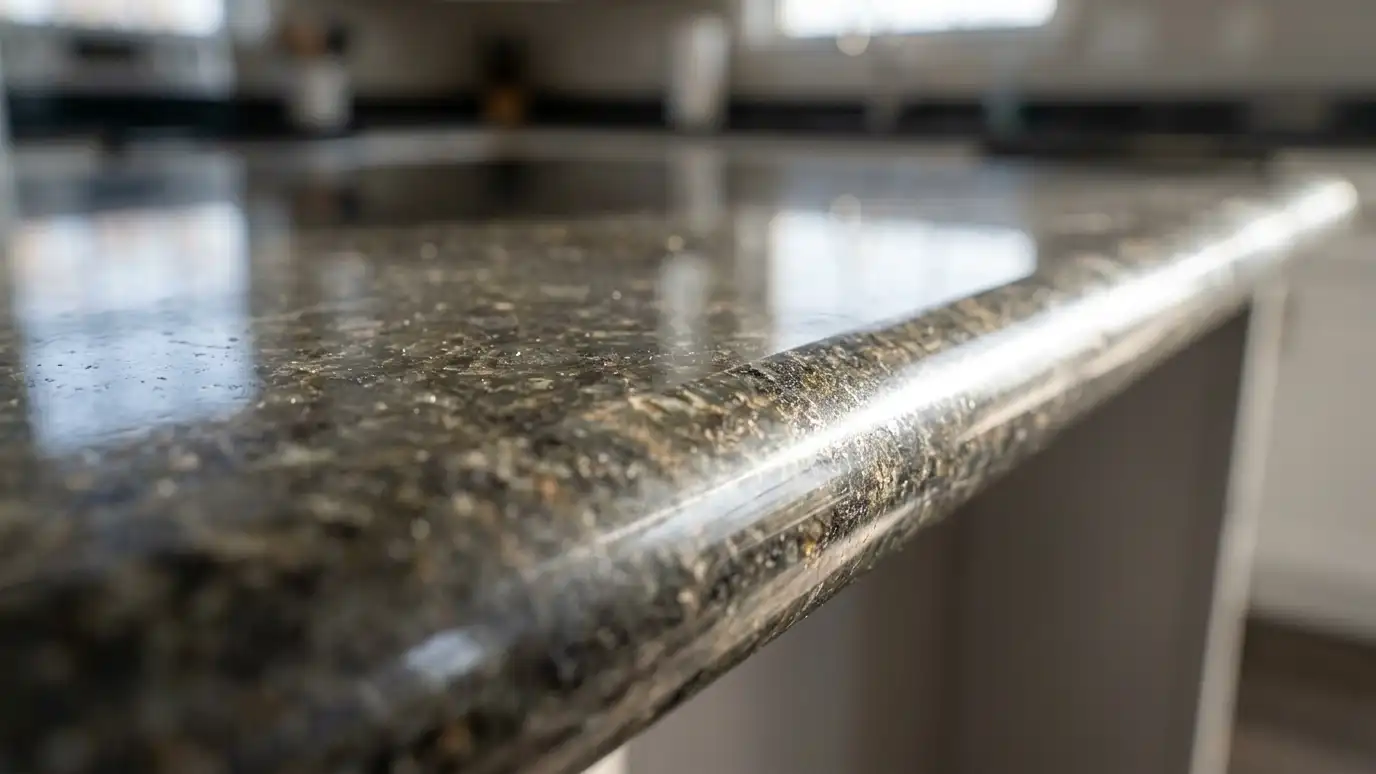
An eased edge softens the sharp corner slightly. A bevel adds a small angled cut. A bullnose is fully rounded. These profiles are clean, easy to wipe and common in family kitchens.
They suit most materials and styles.
They are usually the most economical choices.
If you have small children, consider a rounded edge. A sharp corner in stone is hard, and rounded edges are kinder and chip less. You can always choose a clean eased edge that looks modern and stays safe.
Decorative profiles
Ogee, dupont and other layered profiles add curves and shadow lines. They suit traditional and formal kitchens.
They collect more dust and take more labor.
They work best on thicker stone.
Decorative edges need more stone and more labor, and they can collect dust in the grooves. Ask to see one in your material before you decide, since a profile that looks elegant in a photo may feel fussy in person.
Thickness and mitered edges
Common stone thickness is about 2 or 3 centimeters. A mitered edge joins two pieces at an angle so a thin slab looks thick.
Thicker edges feel substantial and handle overhangs better.
They use more material and cost more.
Thickness changes how the whole counter looks. A thin slab with a slim edge feels light and modern, and a thick, mitered edge feels solid. Think about the cabinets and the room when you choose.
Waterfall edges
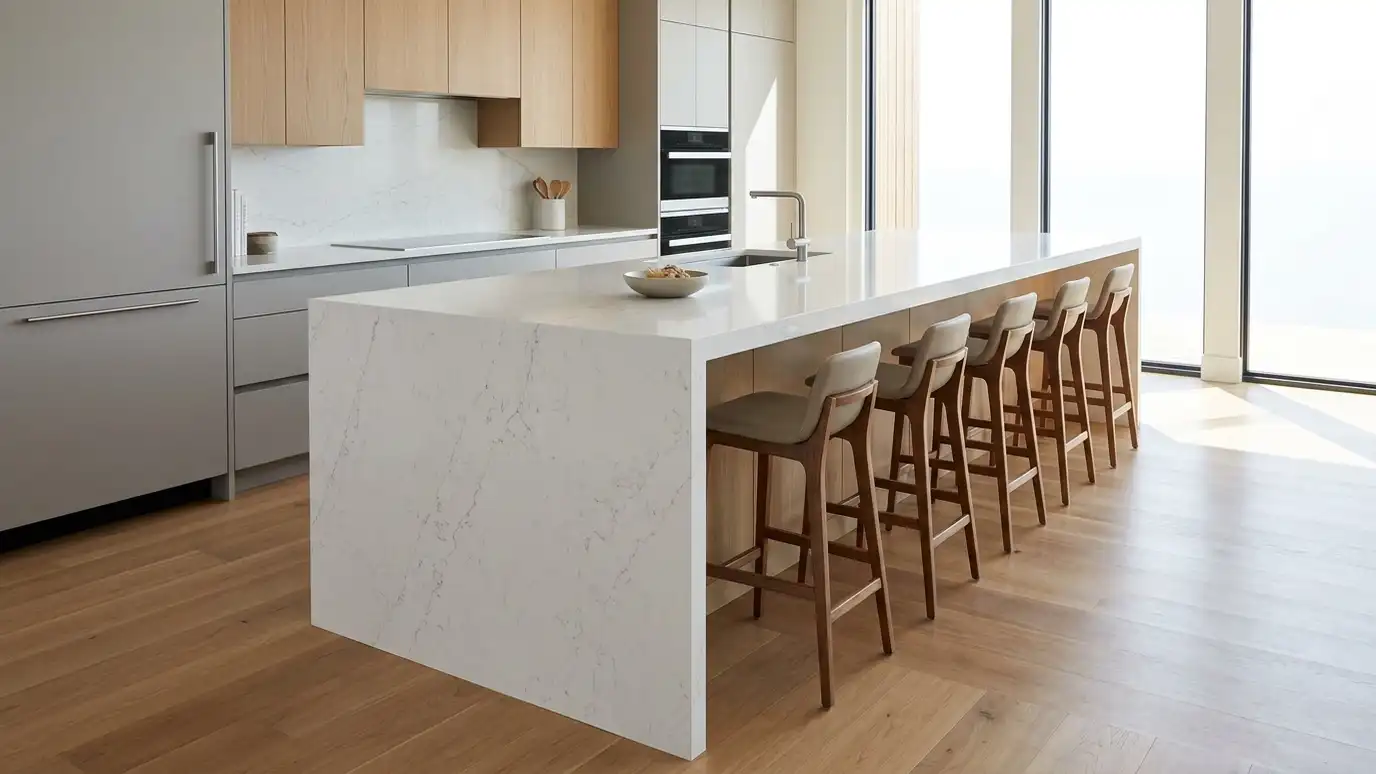
A waterfall carries the stone down the side of an island to the floor. Veining and pattern can flow around the corner.
It makes a statement and needs careful planning and support.
It uses more stone.
A waterfall needs extra planning for the stone and the cabinets. Make sure the floor is level and the toe-kick is planned. Done right, it is one of the most striking features a kitchen can have.
How to choose
Hold edge samples in your material. Think about children, cleaning and the look you want. Ask how each edge affects cost.
Do not choose from a catalog picture alone, since the same edge looks different in different stones.
We bring edge samples to the visit.
Take a photo of your edge choice in the sample and share it with your designer or builder. A shared picture helps everyone agree on what is being made.
Pick an edge that matches your style and your family, and see it in your actual material before you decide.